When a company chooses a forklift for a plant or warehouse, it is not only buying a machine but also the engineering, parts and service behind it for ten years or more. Understanding the brand behind the truck is therefore part of the investment decision. STILL is a forklift and intralogistics manufacturer headquartered in Hamburg, Germany, with a history of more than 100 years since 1920. This article summarises the key milestones of that journey based on official STILL material, and explains why they still matter to forklift users in Vietnam today.
1920: an electric motor repair shop in Hamburg
On 1 February 1920, Hans Still, then just 22 years old, opened a repair shop for electric motors on Spaldingstrasse in Hamburg with two employees. His three principles were swift service, reliability and high quality. Before long the shop was developing its own products, notably the “Matador” mobile light station and small portable generators that brought power to where it was needed.
In 1924, only four years after it was founded, STILL made its debut at the Leipzig Trade Fair with its light stations and electric motors. According to STILL, after 17 years in business the company had around 500 employees. It later moved to the Billbrook district of Hamburg, where the STILL head office remains to this day. From the outset, STILL’s core strength was electrical engineering, the foundation of its later electric trucks.
After the war: from the EK 2000 to the first forklift
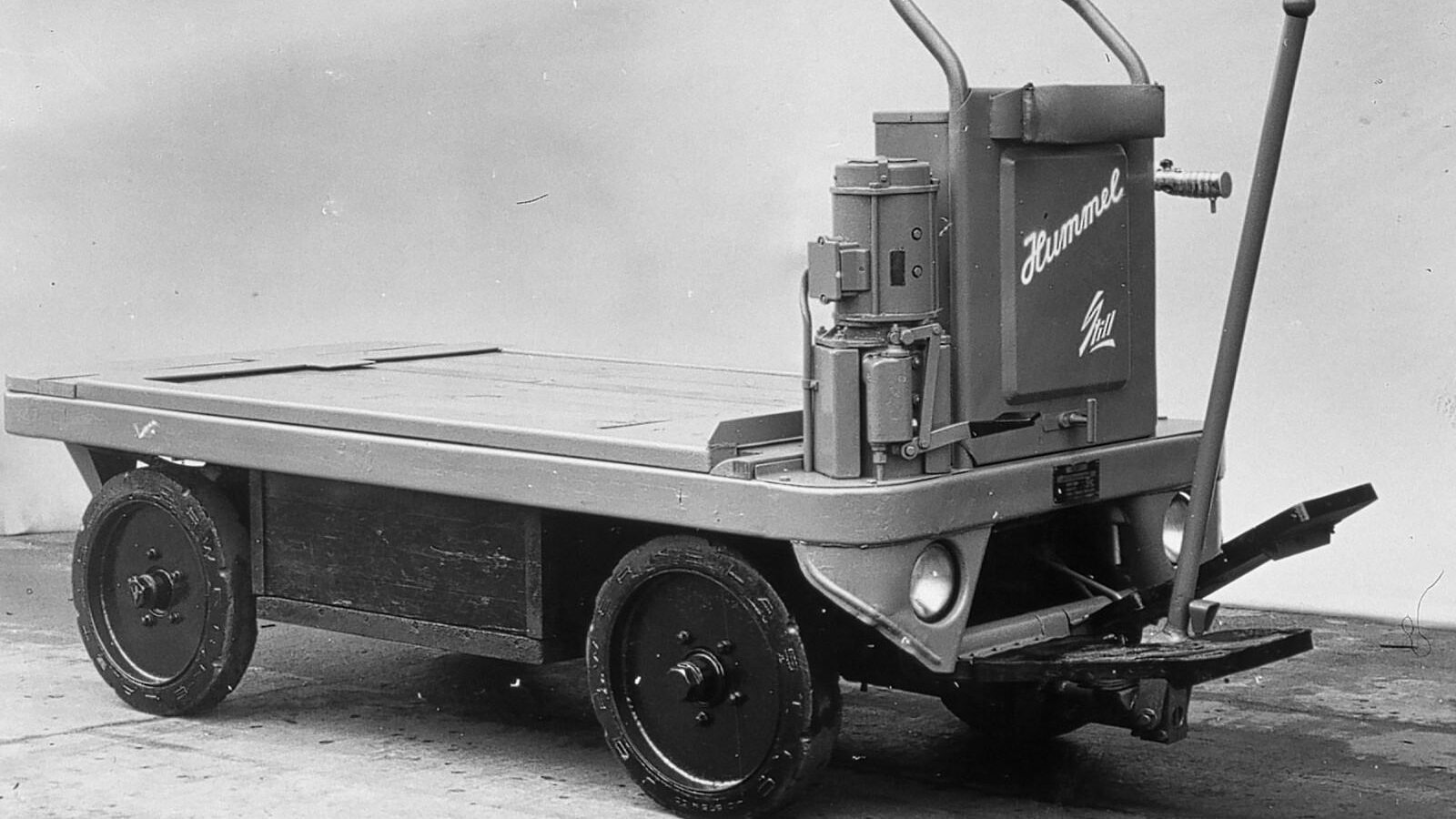
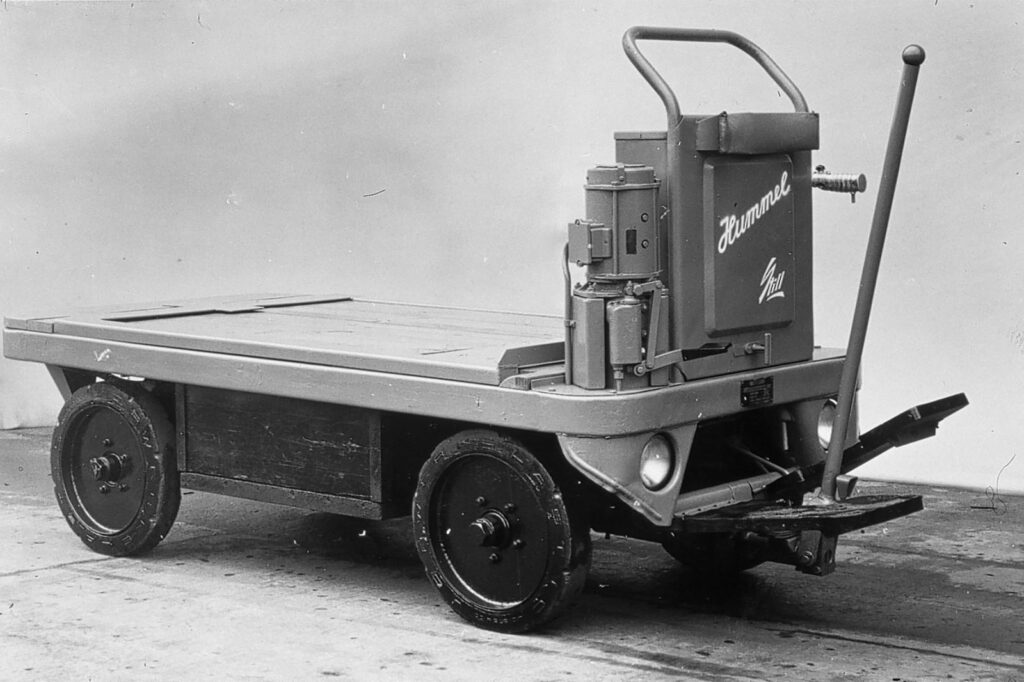
At the start of 1945 STILL had more than 1,500 employees, but post-war reconstruction began with barely 500 and around half of the production sites in ruins. With fuel in short supply, a two-person design team started developing electric transporters in July 1945. In 1946 Hans Still presented the EK 2000, an electric cart with a 2-tonne capacity whose stick steering and independent suspension were patented. In the port of Hamburg the nimble cart pulled up to ten trailers between the storage sheds. STILL regards it as the start of its path to becoming an industrial truck manufacturer.
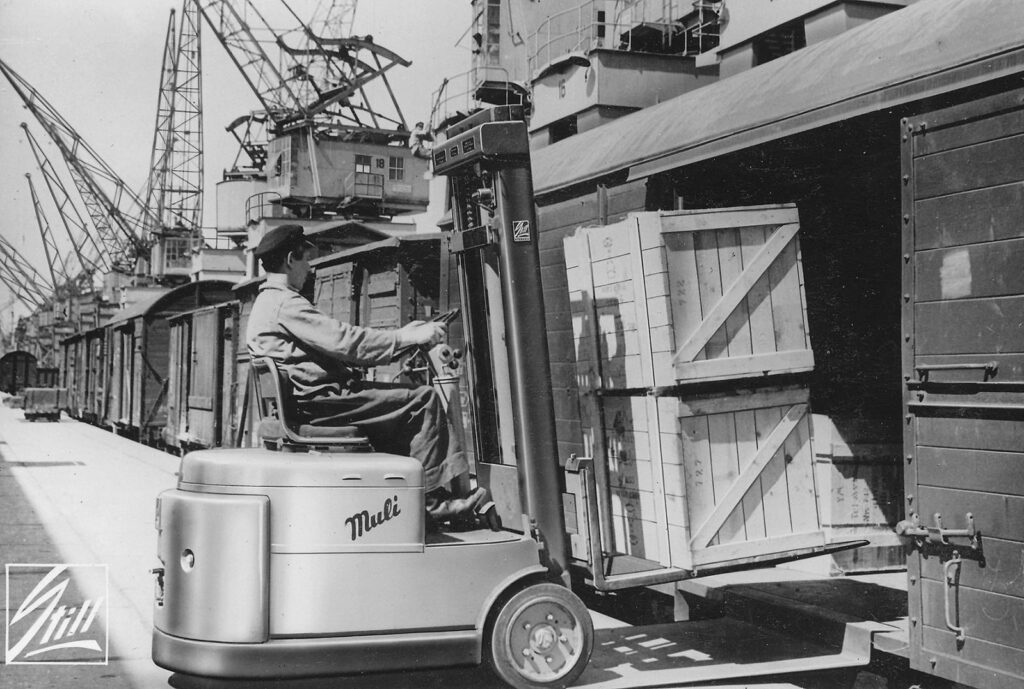
The “Muli-Mobil” three-wheel tractor followed in 1948, and in 1949 STILL launched its first forklift truck, the EGS 1000. The German Federal Railway was one of the first major customers, followed by the Italian and Japanese national railways. STILL says it has stood for electric drive since 1949.
Innovations that became industry standards
Many details that forklift operators now take for granted began as STILL innovations. The table summarises some milestones from STILL’s “100 years” material.
| When | Milestone | What it means for users |
|---|---|---|
| 1946 | EK 2000 electric cart, 2 t | The move into electric industrial trucks |
| 1948 | Muli-Mobil three-wheel tractor | The basis of later tow tractors and tugger trains |
| 1949 | EGS 1000, the first forklift | STILL becomes a forklift manufacturer |
| Mid-1960s | Lateral battery change, first standard on the STILL R 9 | Fast battery swaps in multi-shift work, now an industry standard |
| 1972 | Full service package for a monthly fee | Predictable, controllable fleet costs |
| 1970s | Free-view mast | Better forward visibility and safety |
| 1977 | R 50 electric truck series | The best-selling three-wheel truck in its class |
| 1979 | EFSG-MX very narrow aisle truck | Forerunner of today’s MX range |
| 2019 | RX 60-25/35 electric forklift | Independent tests: more productive than IC trucks of the same capacity |
| 2020 | iGo neo CX 20 autonomous order picker | Robotics in series-production trucks |
STILL also lists the world’s first hybrid industrial truck (the R 7 tractor), joystick control of the hydraulics and the Blue-Q energy-saving mode. How to judge such features on a specific model is covered in our STILL RX 20 electric forklift review.
High-rack warehouses and very narrow aisle trucks
In 1979 STILL introduced its first very narrow aisle truck, the EFSG-MX. During the 1990s it gradually integrated Wagner, a Reutlingen-based specialist in warehouse technology, explosion-protected trucks and above all very narrow aisle trucks with an operator cab that rises with the load. According to STILL, Wagner was also the first to convert industrial trucks into driverless trucks, first guided by painted lines and optics, later inductively by wires in the floor.
Today the STILL MX-X serves racking up to 18 m with assistance systems such as Active Load Stabilisation, which reduces mast vibration, and Active Floor Compensation, which compensates for uneven floors. If your warehouse is considering narrow aisles, our very narrow aisle forklift guide explains when to choose the MX-X or the NXV.
From Muli-Mobil to automated tugger trains
The Muli-Mobil tractor of the late 1940s is the root of STILL’s tow tractors. In 2008 STILL and BMW developed the LiftRunner tugger train system based on the milk run principle, supplying production lines without forklifts. In 2019 the automated STILL LTX 50 tractor with LiftRoller iGo systems won the IFOY Award in the AGV and intralogistics robot category. See the range of STILL tow tractors and our article on electric tow tractors and tugger trains.
Electric trucks: a core competence for a century
From the Matador light station, the EK 2000 and the EGS 1000 to the modern RX range, electricity runs through STILL’s history. In 2018 the company launched the new STILL RX 20, its best-selling electric forklift, suited to narrow aisles and two or three shift operation. In 2019 the STILL RX 60 2.5 to 3.5 t arrived with a travel speed of 21 km/h; according to STILL it was the first electric forklift to beat comparable diesel trucks for productivity in independent tests. Also in 2019, STILL equipped a total of 137 warehouse trucks with fuel cell technology for Carrefour in France.
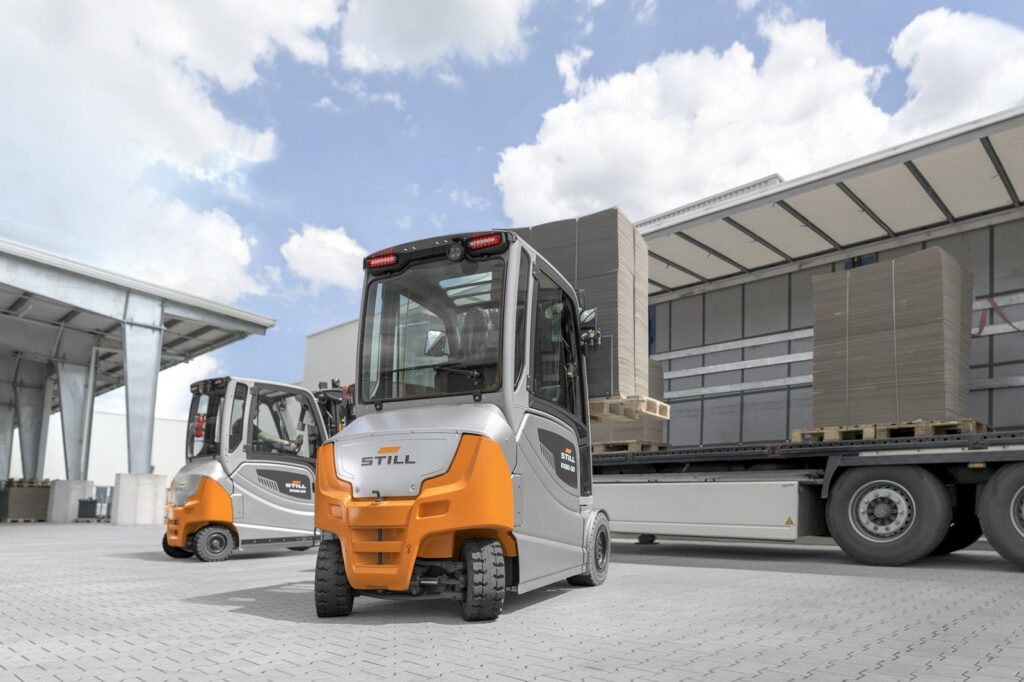
In 2023 STILL introduced the Classic Line, with reduced equipment for applications that do not need premium features, alongside the Xcellence Line. How to compare electric and diesel trucks for your site is explained in electric vs diesel forklift.
Automation and service: STILL today
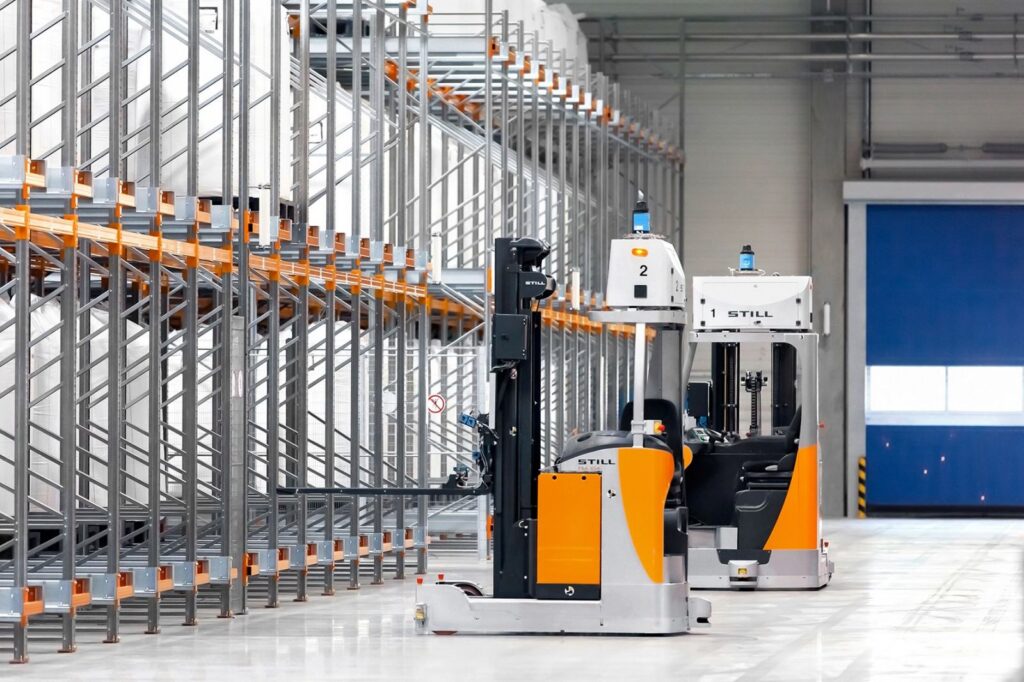
In 2020, its centenary year, STILL presented the iGo neo CX 20 autonomous order picker and, by its own account, became the first industrial truck manufacturer to use robotics in intralogistics as standard. iGo neo technology cuts strenuous climbing on and off the truck by up to 75%; our catalogue includes the STILL OPX 20-25 iGo neo and the full range of STILL automated trucks.
On the service side, STILL was already running its own branded service vans in 1947. According to STILL, it now has 3,500 service technicians, its Hamburg parts centre stocks more than 51,000 original parts, and its service customer survey shows a 97% satisfaction rate. STILL has around 6,900 employees and is part of the KION Group, which employs more than 42,000 people in over 100 countries.
What this means for companies in Vietnam
- Long electric experience: a good fit for the shift from diesel to electric trucks in food, electronics and logistics warehouses.
- A range from hand pallet trucks to automated warehouses: one supplier for the whole fleet simplifies operation and training.
- Parts and service: lifecycle cost depends heavily on downtime; see TCID maintenance and repair and genuine parts.
- Real projects: warehouses in Vietnam running STILL trucks are listed on our projects page.
Frequently asked questions
Which country is STILL from?
STILL is a German brand founded by Hans Still in Hamburg in 1920. Its head office is still in Hamburg-Billbrook, and STILL is part of the KION Group.
When did STILL start making forklifts?
STILL’s first forklift, the EGS 1000, was launched in 1949. Before that, in 1946, the company built the EK 2000 electric cart.
Where can I buy STILL trucks in Vietnam?
TCID is the STILL forklift distributor in Vietnam, offering new trucks, rental, parts, maintenance and operator training. More about the company is on our about us page.
Need advice on the right STILL truck for your warehouse or plant? Send a request via the quote request page or call 0902 63 79 70.
Sources: STILL GmbH: About us, 100 Years of Innovating the Future, Time travel, Electric trucks, VNA trucks, Tugger trains, Service performance. Photos: STILL.