Energy solutions
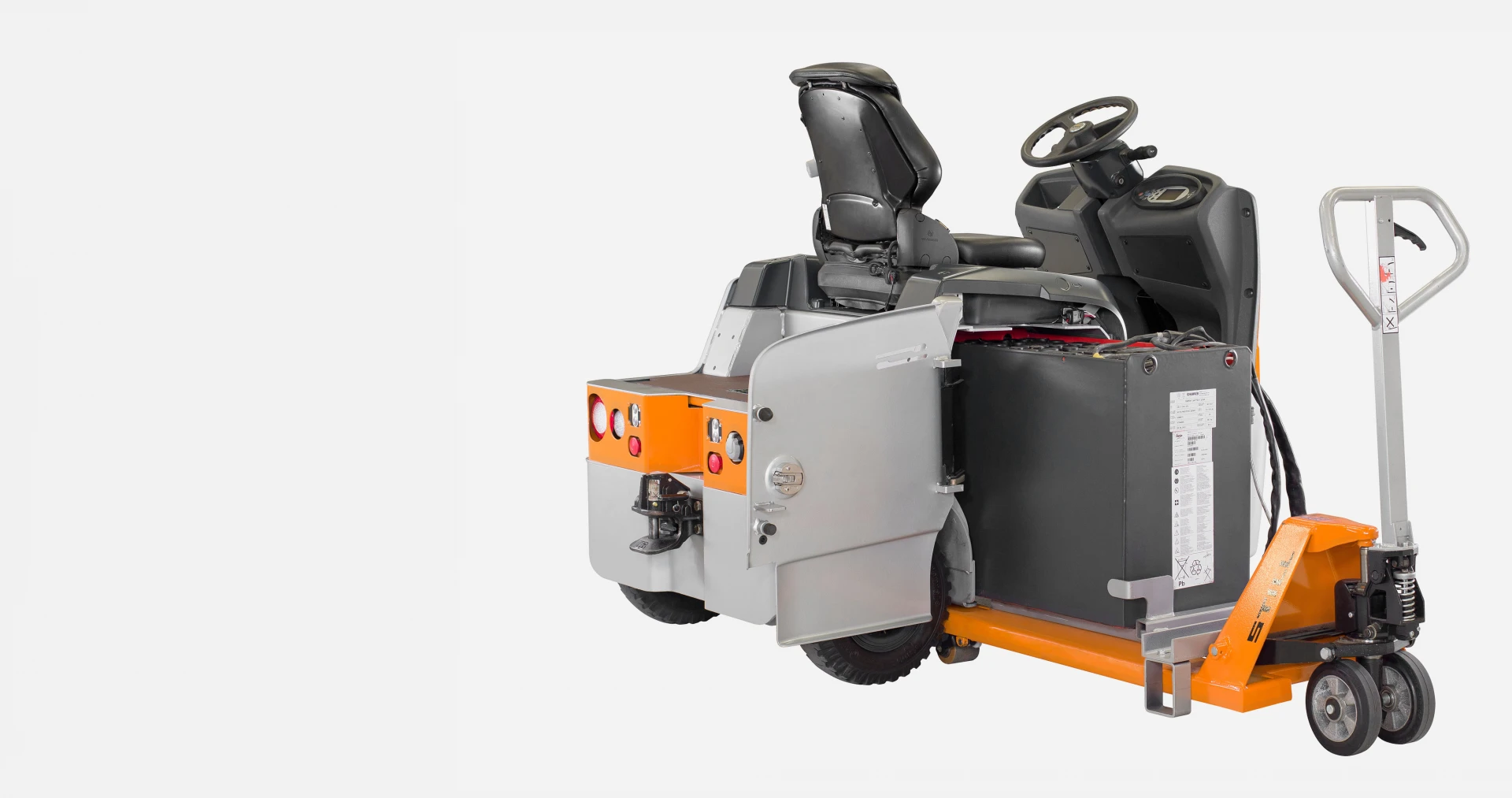
Lead-acid or lithium-ion? Energy solutions for STILL electric forklifts are chosen around your shifts, breaks and charging infrastructure.
When to review your fleet’s energy system
With electric trucks, a battery that runs flat mid-shift, waiting for a battery change or queuing at the charger all cut productivity. On the other hand, choosing a more expensive technology than a single-shift warehouse needs simply ties up capital. It is worth reviewing your energy concept when:
- You move from one shift to two or three, or throughput grows and you would rather not buy more trucks.
- Batteries are being changed mid-shift, and staff time goes into the charging room and topping up water.
- Floor space is tight and you want to reclaim the charging room for storage.
- You are replacing diesel or LPG trucks indoors to cut exhaust emissions and noise.
STILL energy options
STILL supplies a fully harmonised system: truck, battery and charger designed to work together. STILL lithium-ion batteries are STILL’s own designs for each application and truck series, available at 24 V, 48 V and 80 V.
STILL Li-Ion Plus and standard Li-Ion
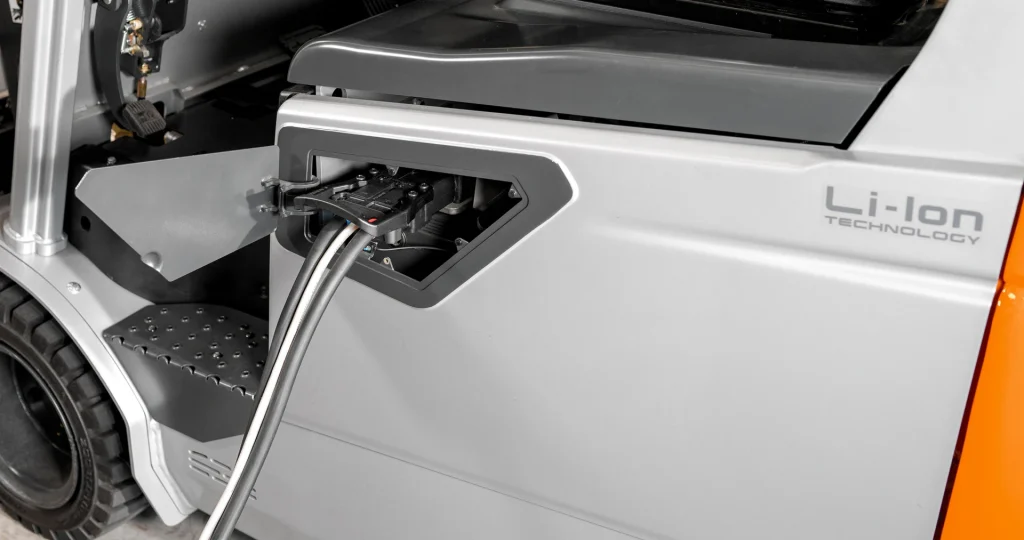
Li-Ion Plus is the high-performance battery for the most intensive use; standard Li-Ion focuses on cost-effectiveness. Both are maintenance-free, can be opportunity charged at any state of charge and, according to STILL, last about twice as long as lead-acid batteries. Lithium iron phosphate (LFP) chemistry keeps performance stable across a wide temperature range, and an optional low-temperature protection is available for cold stores.
Lead-acid batteries
Still a sensible choice when low initial investment matters most and usage is moderate – best suited to single-shift operation with a long enough charging window.
Chargers and the STILL Onboard Charger
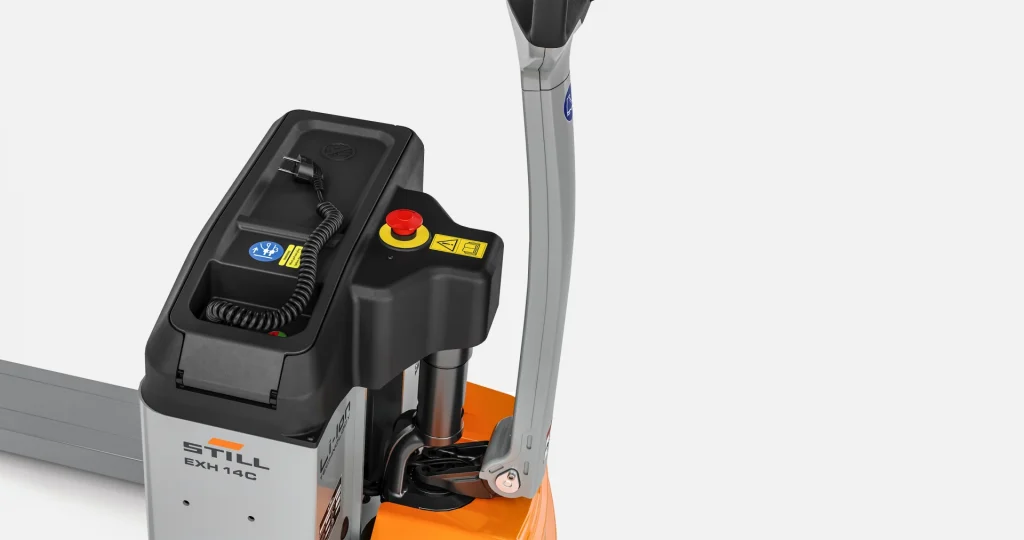
Lithium-ion batteries are charged in the truck, using a suitable charger and plug. The STILL Onboard Charger, built into the truck, allows decentralised charging from a standard socket – handy when trucks change work locations. Trucks such as the STILL EXH 14C or STILL RCE 15 – 20 offer an on-board charger or a convenient side fast-charging port.
STILL Smart Energy Unit
Lithium-ion is charged more often and in shorter cycles. To avoid peak loads when many trucks plug in at once, the STILL Smart Energy Unit allocates a predefined amount of energy to each charger across the whole fleet.
Lithium-ion vs lead-acid compared
| Criterion | Lithium-ion | Lead-acid |
|---|---|---|
| Initial investment | Higher | Lower |
| Maintenance | No watering | Watering, regular cleaning |
| Opportunity charging in breaks | Charge any time | Limited, needs full charge cycles |
| Mid-shift battery change | Usually not needed | Spare batteries needed for multi-shift work |
| Charging room | No dedicated room, charge on site | Ventilated area, battery-change equipment |
| Energy efficiency | Higher | Lower |
| Service life | Longer | Shorter |
| Best suited to | 2–3 shifts | 1 shift |
Look at TCO, not purchase price
Total cost of ownership should include chargers, spare batteries, electricity, maintenance labour, charging-room space, truck waiting time and battery life. Lithium-ion costs more up front but less to run; in multi-shift operation, opportunity charging can also help reduce the number of trucks. In a single-shift warehouse, lead-acid may still be the more economical option. TCID calculates TCO for both options before you decide. For a deeper technical comparison, read lithium-ion vs lead-acid forklift batteries.
Shifts, opportunity charging and charging rooms
Single shift: the truck is fully charged overnight, and lead-acid works well if capacity covers the whole shift. Lithium-ion is worth considering if you want to stop watering or free up space.
Two or three shifts: lead-acid usually means spare batteries and someone looking after the charging room. Lithium-ion is topped up during coffee breaks, lunch or shift changeovers, so one battery can serve several shifts. According to STILL, an RX 60 with lithium-ion technology can run three shifts continuously without a replacement battery, provided charging is well organised.
Charging room: lead-acid batteries give off gas while charging, so they need a ventilated area and battery-handling equipment. Lithium-ion is charged where the work is done, with chargers placed decentrally. Whatever the technology, charging areas still need a fire-safety assessment under current regulations and the manufacturer’s instructions; see also warehouse safety.
Suitable STILL trucks and when to choose diesel or LPG
Most STILL electric forklifts offer a lithium-ion option, from pallet trucks, stackers and reach trucks to counterbalance trucks such as the STILL RX 20 or STILL RCE 15 – 20. For heavy loads, the RX 60 electric counterbalance truck with lithium-ion can replace diesel trucks in many applications – see heavy-duty electric forklift STILL RX 60.
Diesel or LPG trucks still make sense for mainly outdoor work, uneven ground, very heavy loads or yards with no power infrastructure for charging. In that case, see STILL diesel and LPG forklifts. For a general comparison, read electric vs diesel forklifts.
How TCID implements it
- Operational survey: shifts, breaks, travel distances, loads, temperature and power infrastructure.
- Proposal for battery type, capacity, charger, charger locations and an opportunity-charging schedule.
- TCO calculation for lithium-ion and lead-acid on the same basis.
- Truck handover and operator instruction on charging and battery care to STILL standards.
- Monitoring truck utilisation through fleet management and adjusting the charging schedule as needs change.
TCID technicians in Hanoi, Ho Chi Minh City and at the Long Binh service centre in Bien Hoa, Dong Nai check batteries and chargers during scheduled maintenance.
Frequently asked questions
Can a truck running on lead-acid be converted to lithium-ion?
It depends on the model and year. STILL Li-Ion batteries are designed for specific truck series, so truck and charger compatibility must be checked. Send us the model and serial number and TCID will advise.
Does frequent opportunity charging shorten battery life?
According to STILL, lithium-ion batteries can be intermediately charged at any state of charge without loss of performance or battery life, provided a suitable charger is used.
Can lithium-ion be used in cold stores?
Yes. STILL Li-Ion batteries work across a wide temperature range and offer optional low-temperature protection; the exact configuration depends on the cold-store temperature.
Contact TCID for an operational survey and a TCO comparison to find the right energy solution for your fleet.