Safety inspection
Forklift safety inspection is mandatory: forklifts are equipment with strict occupational-safety requirements and must be inspected under current Vietnamese regulations. TCID helps you prepare the trucks, the documents and any repairs so inspection day runs smoothly.
Why must forklifts undergo safety inspection?
Forklifts handle heavy loads at height and among pedestrians. A cracked fork heel, a stretched lift chain or gradually weakening brakes are hard to spot in daily operation, yet can cause falling loads, tip-overs or collisions. That is why, under current regulations on equipment with strict occupational-safety requirements, forklifts must be inspected by a licensed inspection body before being put into service and throughout their working life.
Responsibility for keeping trucks inspected on time lies with the company operating them. Inspection results are also essential evidence during customer supplier audits or when records need to be traced after an incident.
Types of forklift inspection
Under current regulations, forklifts typically go through three types of inspection. Specific intervals and procedures for each equipment type are set out by the licensed inspection body, so please confirm the details for your case directly with the inspection body.
| Type | When it applies | How TCID helps |
|---|---|---|
| Initial inspection | Before a new or used truck is put into operation | Handover in the correct configuration, technical documentation, full pre-inspection check |
| Periodic inspection | When due during service life, at the interval set by the inspection body | Due-date tracking and reminders, pre-inspection check, combined with the next scheduled service |
| Extraordinary inspection | After an incident, after major repairs or modification of load-bearing parts, or when requested by the authorities | Damage assessment, repair with genuine parts, preparing the truck for re-inspection |
Please note: TCID is not an inspection body. Inspection and the issue of inspection results are carried out by a licensed inspection body; TCID acts as the technical partner that prepares the trucks, coordinates and rectifies defects. Preparing both drivers and equipment is summarised in our article on operator training and safety inspection.
What is checked in detail
Following STILL’s thorough examination standard, a safety check is an overall assessment of the condition of the truck and its equipment. Technicians check everything from the forks to measuring the length of the load chains with special test equipment, and record the results in a test report. The main groups of items are:
- Steering, brakes, wheels, controls and drive.
- Hydraulic system, mast, hoist chains and load handling equipment such as forks.
- Overhead guard.
- Attachments, chargers and batteries.
Beyond the trucks, safety checks to STILL standards can also cover racking, since damaged racks are a major risk right next to the truck aisles. If your warehouse uses or plans to invest in racking, see our racking systems page to combine this with upright and rack-end protection.
How does TCID support your inspection?
To avoid finding defects just before the deadline and parking trucks while waiting for parts, TCID follows a proactive sequence:
- Intake and review: collect the truck list, document status and last inspection date for each truck.
- Pre-inspection check: technicians check the safety items listed above and draw up a list of points to fix.
- Rectification: replace forks, chains, brake linings, wheels or hydraulic components with genuine parts from STILL Original Parts, then adjust and test.
- Document preparation: help compile the technical documents, truck history and service records required by the inspection body.
- Inspection coordination: schedule with the licensed inspection body, with a technician on site to assist when needed.
- Follow-up: address any recommendations, file the results and remind you of the next periodic inspection.
The pre-inspection check can be combined with your scheduled maintenance and repair visit. This is also what STILL recommends: combining safety checks with servicing so trucks are taken out of operation less often.
Managing inspection dates and day-to-day safety
Never miss an inspection date
In a fleet of many trucks, each with a different inspection date, it is easy to miss one. TCID can monitor deadlines and send reminders on request. For companies using the STILL neXXt fleet platform, the Maintenance Control module displays all maintenance and inspection dates with the related documents and sends automatic notifications when a date approaches. See our fleet management page.
Pre-shift checks – protection between inspections
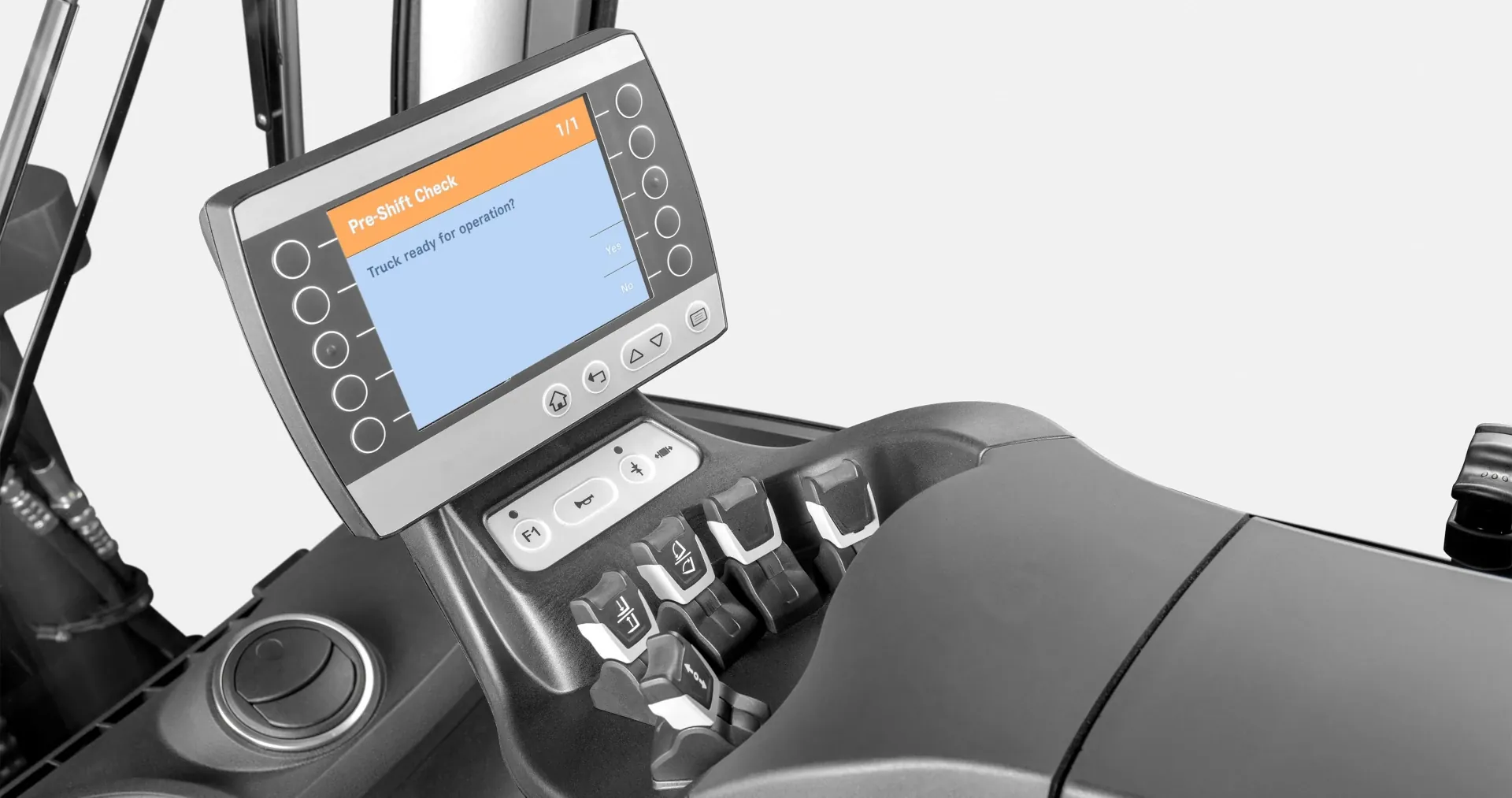
Between inspections, the driver’s check before every shift is the most important safeguard. On the STILL Easy Control display, the Pre-Shift Check function requires the driver to confirm that the truck is fit for operation before all functions are released; the company chooses the check questions and can configure the truck to limit its performance automatically if an answer is negative. A detailed checklist is available in our pre-shift safety checklist article.
Truck inspection is one part of overall safety. Drivers need instruction in correct operation – see our operator training service – and the warehouse needs collision-reduction solutions such as Safety Assist, warning zone lights and reversing cameras, covered on our warehouse safety page.
Frequently asked questions
Does TCID carry out inspections and issue inspection results?
No. Inspections are carried out by a licensed inspection body. TCID supports you with the pre-inspection check, defect rectification, document preparation and scheduling with the inspection body.
How often must a forklift be re-inspected?
The periodic inspection interval is determined under current regulations and stated by the inspection body on the inspection result. TCID can send you reminders.
Do used or rented forklifts need inspection?
Any truck put into operation at your site needs a valid inspection result under current regulations. For a rented truck, agree in the contract which party is responsible for inspection.
Get ready for your next inspection
Send us your truck list and the latest inspection dates, and TCID will propose a pre-inspection schedule that fits your production plan. Our technical team works from the Hanoi office, the Ho Chi Minh City office and the Long Binh Service Center in Bien Hoa, Dong Nai.