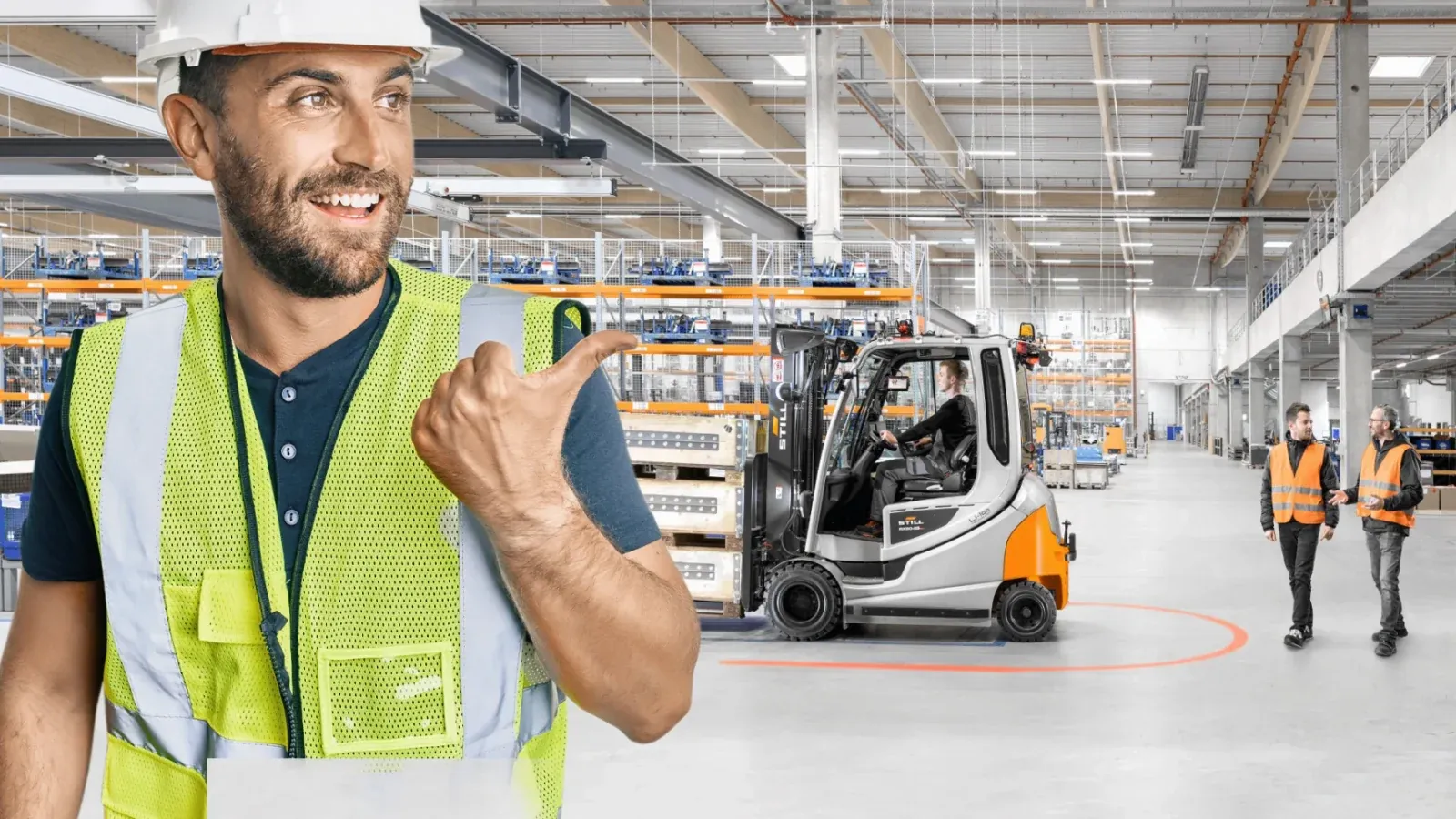
Forklifts raise warehouse productivity, but they are also a major risk if operators lack skills or trucks are not properly checked. Forklift operator training and safety inspection are therefore two things no company can skip. This article summarises what companies need to prepare to run their fleet safely and in compliance with regulations.
Why training and inspection matter
Most forklift incidents stem from incorrect operation: overloading, travelling with raised forks, cornering fast with a load, reversing without looking, or carrying people on the forks. At the same time, trucks that are not checked regularly can develop faults in the brakes, lift chains or hydraulics that nobody notices. Training addresses the human factor; inspection and maintenance address the equipment. Without either one, the risk remains.
Beyond safety, well-trained operators handle trucks more smoothly, hit racking less often, damage fewer goods and extend the truck’s service life. This is an economic benefit many companies overlook.
Legal requirements: general principles
Forklifts belong to the group of equipment with strict occupational safety requirements. Under current Vietnamese regulations, companies need to:
- Ensure forklift operators receive safety training and hold an appropriate certificate.
- Have forklifts safety-inspected before being put into service and periodically during use, by a licensed inspection body.
- Keep equipment, inspection and training records to present to the authorities on request.
Regulations may change over time and vary by equipment type. Companies should contact licensed inspection and training bodies directly for accurate guidance on their specific case. This article is not legal advice.
Preparing for operator training
Selecting trainees
Choose staff who are physically fit, responsible and familiar with warehouse procedures. Train a few extra people so there are substitutes during leave or peak season.
Essential content
- Forklift construction and operating principles, load centre and the capacity chart.
- Pre-shift truck checks.
- Lifting, lowering, placing loads in racking and loading lorries.
- Safe travel: speed, cornering, ramps, watching for pedestrians.
- Emergency procedures and safe battery charging or refuelling.
- Practical training on the same truck type used in the company.
The last point is important: driving a counterbalance forklift differs from driving a reach truck or order picker. When a company introduces a new truck type, operators need specific instruction on it. For more on capacity, see how to choose forklift capacity.
Organising the course
Our operator training programme can be tailored to each company, combining theory and practice on trucks. The company prepares the trainee list, a practice area and a schedule that does not disrupt operations.
Preparing for safety inspection
Before the inspection, the company should prepare:
- The truck’s technical file: manufacturer documentation, specifications, origin.
- Previous inspection records (if any) and the service log.
- The truck in good working order, serviced, with all safety devices present.
- Suitable test loads as required by the inspection body.
- A safe test area and a certified operator.
Have the truck serviced before the inspection to fix issues such as oil leaks, stretched lift chains or weak brakes early. Our safety inspection support service works with licensed inspection bodies so you can plan schedules and paperwork in advance.
Distinguishing the safety activities
| Activity | Performed by | Purpose |
|---|---|---|
| Pre-shift check | Operator | Detect day-to-day faults early |
| Scheduled maintenance | Technician | Keep the truck in good condition, prevent breakdowns |
| Safety inspection | Licensed inspection body | Confirm the truck meets safety requirements |
| Operator training | Training provider | Ensure operators have the required skills and knowledge |
Daily checks: small habit, big impact
In addition to periodic inspection, operators should carry out a quick check before each shift:
- Tyres, forks and lift chains for damage.
- Oil leaks under the truck.
- Brakes, horn, lights and warning beacon working.
- Battery charge or fuel level.
- Seat belt, controls and display showing no errors.
Record the results and report faults immediately. Never operate a truck with a safety-related fault.
Safety technology on STILL trucks
Training is more effective when trucks have assistance systems. For example, on the STILL EXH-S 20 – 25, Curve Speed Control automatically adapts speed to the steering angle when cornering, and versatile access control prevents unauthorised use, so only trained staff can operate the truck. Learn more about warehouse safety solutions such as traffic routing and pedestrian warnings.
Frequently asked questions
Do forklift operators need a certificate?
Under current Vietnamese regulations, forklift operators must receive safety training and hold an appropriate certificate. Contact a licensed training provider for the specific requirements.
How often must a forklift be inspected?
The inspection interval depends on current regulations and the equipment’s condition. The licensed inspection body determines the interval and records it in the inspection file.
Does a new forklift need inspection?
Yes. Trucks must be inspected before being put into service, both new and used.
Can training be held on site?
Yes. On-site training lets operators practise on the actual trucks and premises. Contact us to arrange a suitable programme.
Need to organise forklift operator training or prepare for an inspection? Send a request via our quote page or call our hotline 0902 63 79 70.