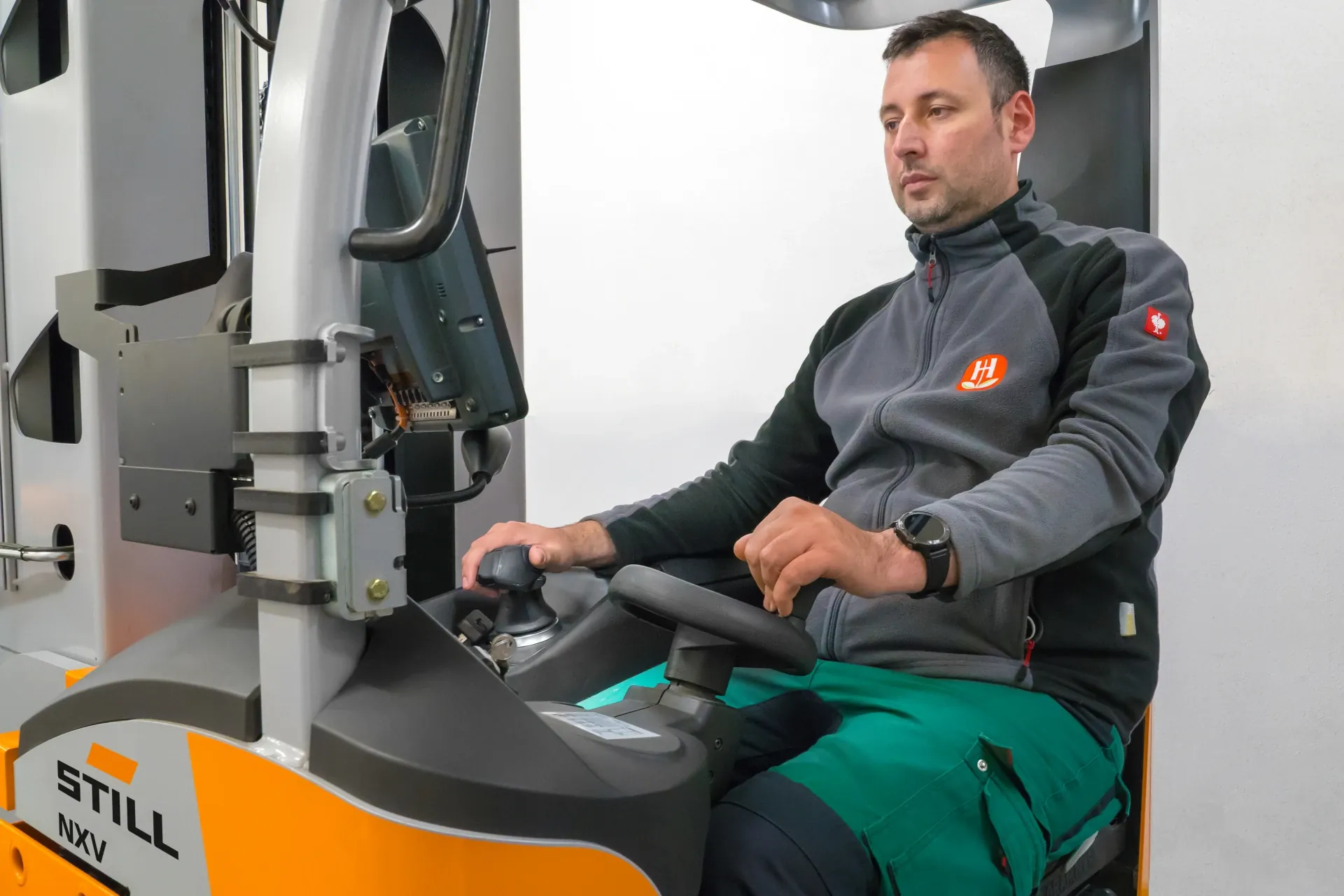
Operator training
STILL forklift operator training at handover and as refresher sessions: TCID shows your operators how to use their trucks correctly and safely, combining theory with practice on your own trucks.
When STILL operator training is needed
STILL trucks offer many operator assistance functions, but real-world results still depend on the person in the seat. Operators new to a truck tend to drive out of old habits: cornering fast, lifting before the truck has fully stopped, ignoring warnings on the display. The result is rack impacts, damaged goods, faster wear and wasted energy.
As STILL puts it, knowledge creates safety: well-trained operators work more safely and productively, and the company benefits from longer truck service life and lower operating and energy costs. TCID builds operator instruction into the truck handover process and recommends refresher sessions when:
- You take delivery of a new, rental or used STILL truck.
- Operators switch to another truck type, for example from a counterbalance truck to a reach truck or VNA truck.
- New operators join or operators move to a different work area.
- The warehouse layout, racking height, load type or attachments change.
- After an impact or incident, or when the same handling error keeps recurring.
Course content
The programme follows the structure of STILL operator training, adapted to your warehouse conditions and the trucks you run, and consists of theory, practice and a review at the end of the session.
Theory: load centre, stability, load charts
Operators need to understand why a truck can lose stability even when the load is below rated capacity. Topics include truck design and attachments, drive types, load centre and the balance between load and counterweight, the effect of lift height and mast tilt, reading the load chart on the truck, traffic rules in the warehouse, danger zones around the truck and rules for parking. Background reading: how to choose forklift capacity.
Practice on your own trucks
Practice takes place on the customer’s premises, with the actual trucks and the goods handled every day: adjusting the seat, steering, lift controls and display; lifting and lowering, putting away and retrieving pallets from racking, travelling with a load, driving on ramps, through intersections and in pedestrian areas. The instructor corrects handling on the spot.
Pre-shift checks
Operators learn the daily check routine: brakes, steering, horn, lights, forks and lift chains, wheels, leaks, charge or fuel level, warnings on the display. With the optional Pre-Shift Check on STILL Easy Control, the operator must confirm the truck’s condition on the display before all truck functions are enabled; you choose the questions and can set the truck to limit performance when an answer is negative. Reference list: pre-shift safety checklist.
Battery charging and refuelling
For electric trucks: charging, opportunity charging between shifts, checking connectors, cables and the charging area, and the differences between lead-acid and lithium-ion batteries. For diesel and LPG trucks: safe refuelling and LPG cylinder changes.
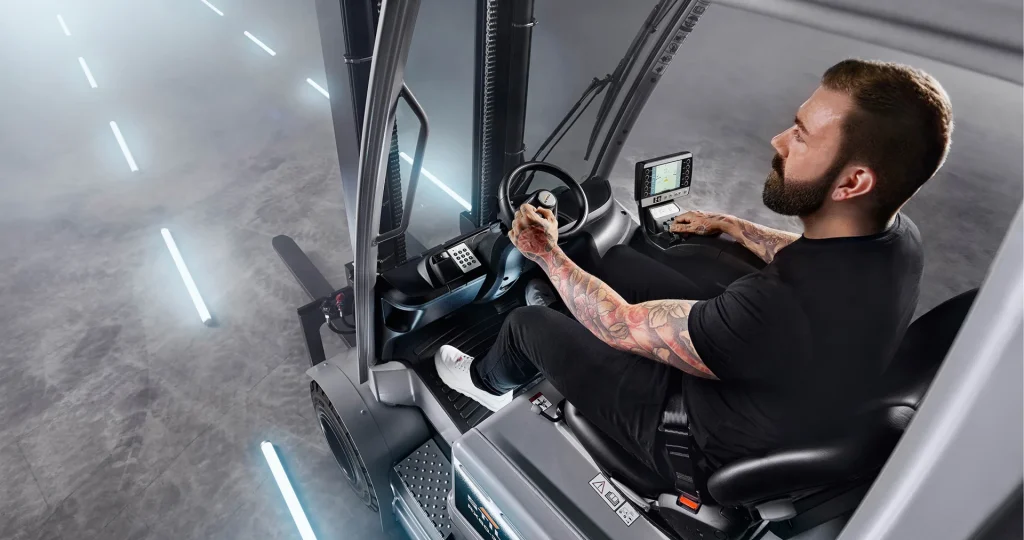
Training formats
| Format | When | Who | Focus |
|---|---|---|---|
| At handover | New or rental trucks delivered | Operators, team leaders, in-house maintenance | Functions, settings, pre-shift checks, charging |
| Truck-type conversion | A different truck range is introduced | Experienced operators | Control differences, high lifting, narrow aisles |
| Periodic refresher | Per your company safety plan | Whole operator team | Stability, load charts, common errors |
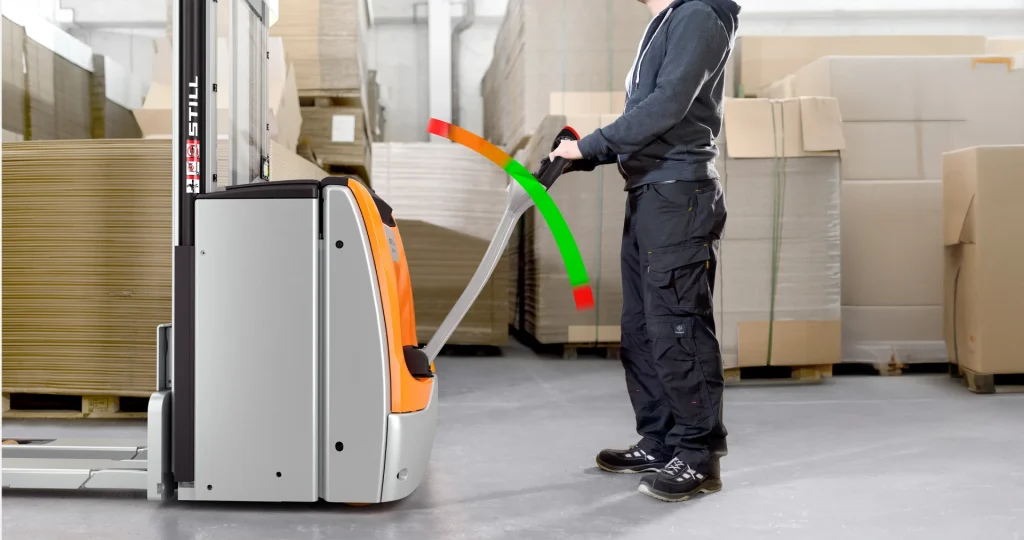
| Pedestrian trucks | Using pedestrian pallet trucks, stackers | Warehouse and production staff | Tiller, speed, distance from the truck |
Content by STILL truck type
- Counterbalance trucks STILL RX 20, RX 60, RCE (electric forklifts) and diesel/LPG RX 70: tilting the mast with a load, cornering, working on ramps; seat belt monitoring that reduces speed when the belt is not fastened; choosing drive programmes such as Blue-Q on the RX 20.
- Reach trucks STILL FM-X (reach trucks): extending and retracting the mast, storing loads at height.
- Pallet trucks, stackers STILL EXH, EXV: using the tiller, keeping distance when walking, loading at the dock.
- Order pickers, VNA trucks STILL EK-X, MX-X, NXV: working at height, rules for entering narrow aisles.
Assistance features operators need to understand
Assistance systems only work when operators understand what they do. Depending on model and configuration, the session explains:
- Curve Speed Control: automatically adjusts speed to the steering angle when cornering.
- Dynamic Load Control, load display: estimates the load on the forks and the corresponding maximum lift height.
- STILL Safety Light, Warning Zone Light: project light signals onto the floor to warn pedestrians.
- Reversing Assistant Plus: camera-based reversing aid that shows the rear area on the display and detects people and obstacles.
- PIN access control: only authorised operators can start the truck.
Details on the warehouse safety page; for managing operator access and impacts per person see fleet management.
How TCID delivers training
- Survey: truck list, load types, warehouse layout, number of operators.
- Proposal: content by truck type, schedule that does not disrupt production.
- Theory: load centre, stability, load charts, safety rules.
- Practice and review on your own trucks.
- Handover: record of trained operators, proposed refresher schedule.
Training often goes together with maintenance and repair and safety inspection support. Note: mandatory occupational safety training for operators of equipment with strict occupational safety requirements is carried out under current regulations by licensed training providers. TCID sessions focus on using STILL trucks correctly and safely; they do not replace mandatory training and are not an operator licence.
Frequently asked questions
Where are sessions held?
Mainly at your warehouse or plant, on the trucks that will be used. TCID has offices in Hanoi and Ho Chi Minh City and a service centre in Long Binh, Bien Hoa, Dong Nai.
Do experienced operators need training?
Yes. They still need to learn the functions, display and assistance systems specific to STILL trucks and the load chart of the exact truck in use.
Is training available for rental trucks?
Yes. At rental truck handover, TCID covers the main functions, pre-shift checks and charging or refuelling.
How often should refreshers be held?
According to your company safety plan and current regulations; in addition, repeat training when truck types change, the layout changes or after an incident.
Send TCID your truck list and number of operators to get advice on content and a training schedule that fits.