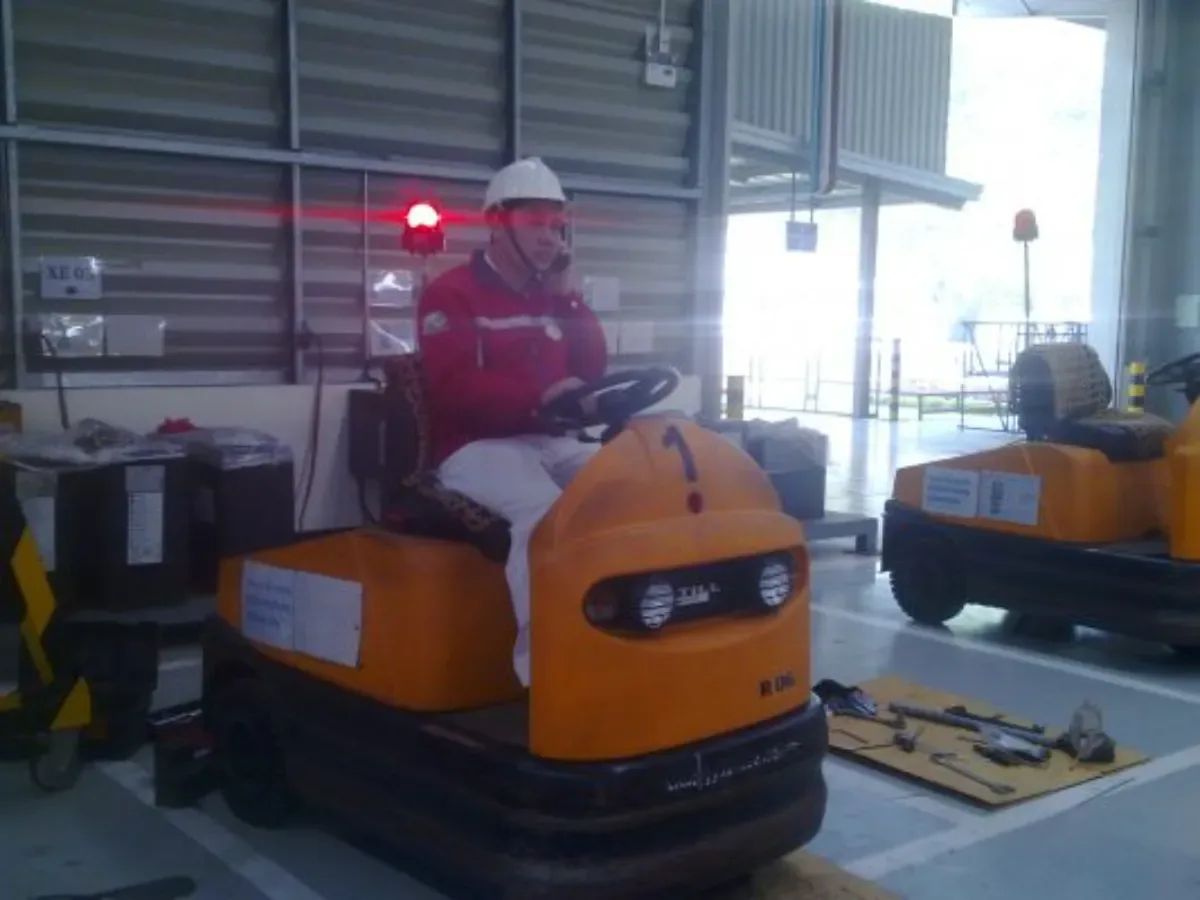

Honda Vinh Phuc plant
STILL trucks:
- 4 R06 tow tractors
- Handover: 2013
STILL tow tractors cover stand-on, rider-seated and heavy-duty electric models with 2,000 to 35,000 kg of drawbar pull, moving several trailers per trip across plants, yards and airports.
Showing all 5 results
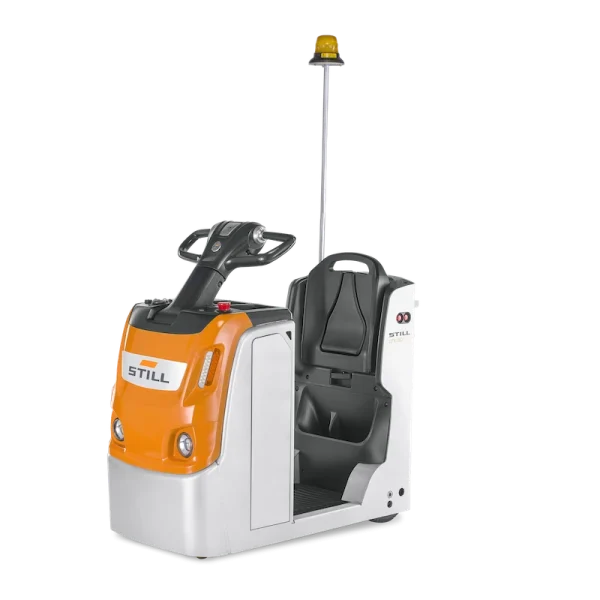
Electric tow tractor, 2 t towing capacity, for in-plant transport.
Price on request Request a quote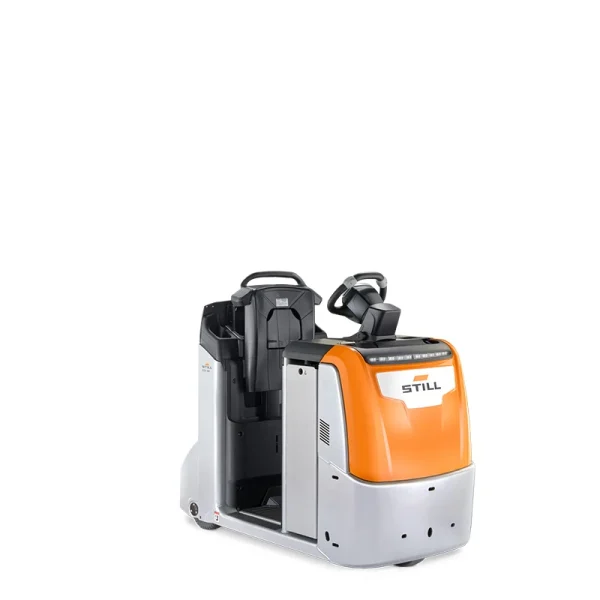
Electric tow tractor, 5 t towing capacity, for tugger trains.
Price on request Request a quote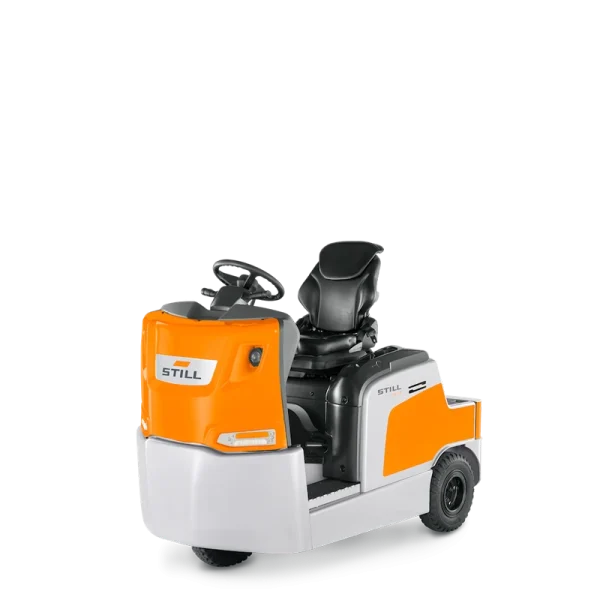
Electric tow tractor, 7 t towing capacity, for plants and airports.
Price on request Request a quote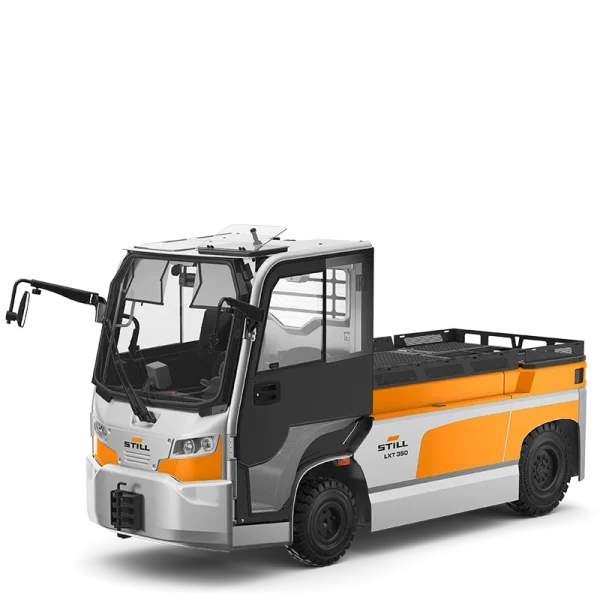
Seated electric tow tractor for heavy trains and long in-plant routes.
Price on request Request a quote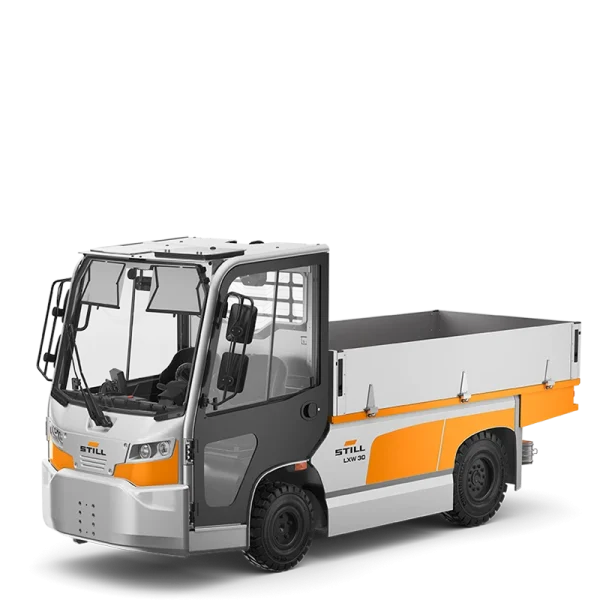
Electric platform truck for carrying loads and towing trailers.
Price on request Request a quote

A tow tractor is an electric vehicle that pulls trailers, carts or trolleys, used for horizontal transport over long distances in factories, yards, rail terminals and airports. It does not lift pallets into racking; it moves a large volume in a single trip, leaving forklifts in the loading and racking areas.
Consider adding an electric tractor when:
Route design and supply stations are covered in our article on electric tractors and in-plant tugger trains; this page focuses on choosing the model.
The range comprises five product lines in three families by operating style and towing capacity, all electric with zero local emissions.
The STILL LTX 20 pulls 2,000 kg at 8 km/h and, at only 600 mm wide, fits tight aisles. The STILL LTX 50 pulls 5,000 kg at up to 14 km/h, with a Li-Ion version and the automated LTX 50 iGo systems. Both offer pedestrian mode, so there is no constant getting on and off at closely spaced stops.
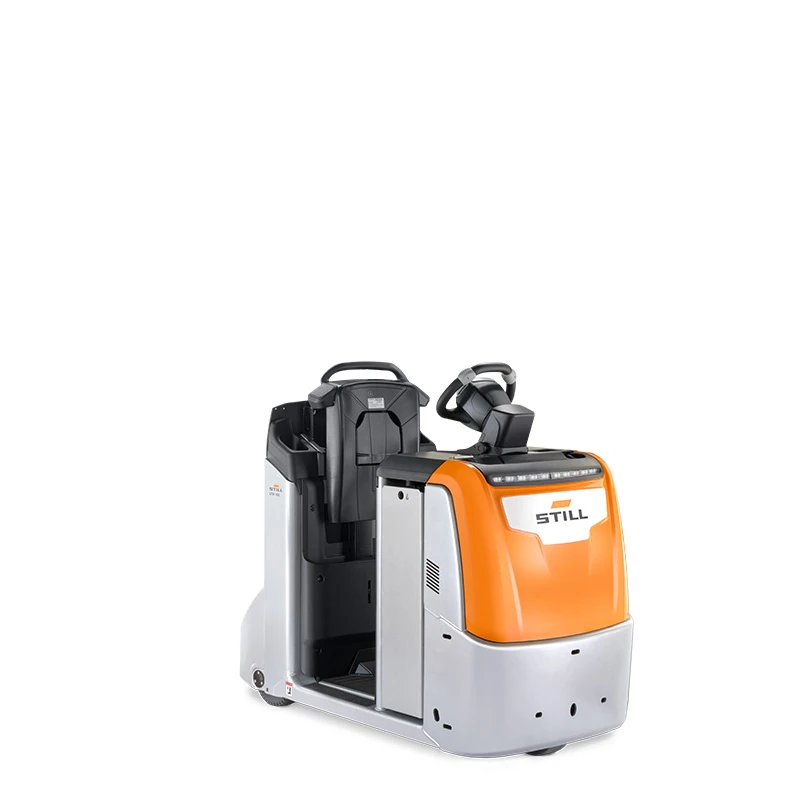
The STILL LTX 70 delivers up to 8,000 kg of drawbar pull, a top speed of 20 km/h and a 48 V battery, and works both indoors and outdoors. A sprung forklift-style seat reduces fatigue on long routes; the battery is changed from the side, which helps in multi-shift operation.
The STILL LXT 120/350 is an 80 V heavy-duty series with drawbar pull from 12,000 kg to 35,000 kg depending on the model, twin-motor drive and a configurable cab. The STILL LXW 20/30 shares the same platform but adds a load deck for 2,000 kg or 3,000 kg while still towing 6,000 kg behind it – one truck doing two jobs.
| Model | Truck type | Max. drawbar pull | Max. speed | Battery voltage | Key features |
|---|---|---|---|---|---|
| STILL LTX 20 | Stand-on tractor | 2,000 kg | 8 km/h | 24 V | 600 mm width, pedestrian mode |
| STILL LTX 50 | Stand-on tractor | 5,000 kg | 14 km/h | 24 V | STILL Easy Drive steering wheel, Li-Ion and iGo systems versions |
| STILL LTX 70 | Rider-seated tractor | 8,000 kg | 20 km/h | 48 V | Three braking systems, STILL Ramp Indicator |
| STILL LXT 120 – LXT 350 | Heavy-duty tractor with cab | 12,000–35,000 kg | 22–25 km/h | 80 V | Twin-motor drive, DSR, Li-Ion versions |
| STILL LXW 20 / LXW 30 | Platform truck and tractor | 6,000 kg | 20–23 km/h | 80 V | 2,000 / 3,000 kg load deck, DSR |
Figures are taken from the manufacturer's data sheets; the exact configuration (coupling type, battery, cab) may vary by order.
Total weight to be towed. Add the weight of goods and trailers, and choose a tractor with spare pulling capacity where the route has ramps. Light supply routes suit the LTX 20 and LTX 50; heavy goods or many trailers call for the LTX 70 or the LXT series.
Route characteristics. Short routes with many stops suit stand-on trucks; long, fast routes need a seat and a cab. In narrow aisles, truck width and the turning radius of the whole trailer train are decisive.
Indoors or outdoors. Routes across yards or ramps call for an automatic parking brake, gradient display and cab, as on the LTX 70, LXT and LXW. Towing baggage and air cargo has its own requirements, see our article on the airport tow tractor.
Energy and shifts. Single-shift work can run on lead-acid batteries charged overnight; multi-shift operation should consider Li-Ion with opportunity charging, or lateral battery change. See our energy solutions.
A long trailer train passing through pedestrian areas always carries risk. The STILL SafetyLight 4plus projects blue spots approx. 5 m in front of and behind the truck, warning at blind corners. On the LXT and LXW, Descent Speed Regulation (DSR) automatically limits downhill speed according to load and inclination. The LTX 70 combines an electric brake, a hydraulic brake and an automatic parking brake that engages as soon as the truck stops.
The trucks can connect to STILL neXXt fleet and STILL FleetManager for access control and impact detection, managed alongside your forklifts. TCID supports route surveys, configuration proposals and maintenance for every product line in this range.
The price depends on the model, towing capacity, battery type, cab, coupling and safety options. TCID quotes once we know the weight to be towed, the route layout and the number of shifts.
Usually yes, if coupling and load rating match. STILL trucks offer various couplings; send us details of your existing trailers so our engineers can check.
Yes. The LTX 50 iGo systems is an automated stand-on tractor that integrates with transport control software, suited to supply routes repeated on a fixed cycle.
Electric trucks have fewer wearing parts than combustion-engine vehicles. According to the manufacturer, the LTX 70 has service intervals of up to 1,000 operating hours; the actual schedule should follow usage intensity.