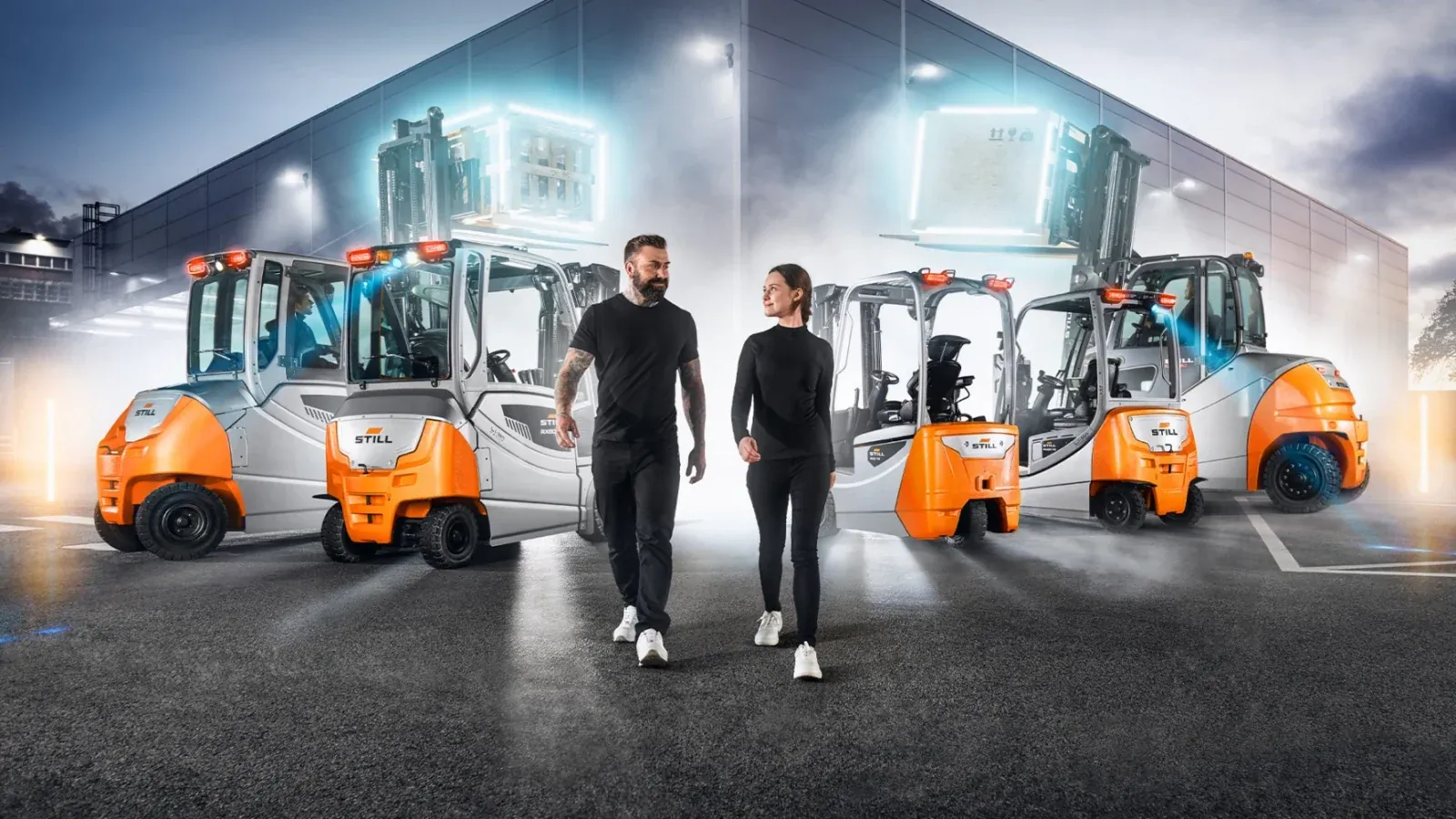
Looking for an affordable electric forklift does not mean choosing the truck with the lowest quote. For a business, a truly affordable truck is one with a low total cost of ownership over its whole life: the right configuration, little downtime, sensible energy use and value retained when needs change. This article explains the factors that drive cost and how to optimise each one, together with compact STILL models suited to low- and medium-intensity work.
An affordable electric forklift really means low total cost of ownership
The purchase price is only the first item. Over years of operation, a business also pays for energy, batteries, maintenance, parts and time the truck spends waiting for repair. A truck bought cheaply but prone to breakdowns or short of parts can become the most expensive investment in the warehouse. So ask three questions:
- Does the truck match the load capacity and lift height you need, no more and no less?
- Are running costs (energy, battery, maintenance) low and easy to budget?
- Does the truck have a clear origin, with long-term technical support and genuine parts?
Choose the right capacity and lift height: do not pay for excess
The most common mistake is buying a bigger truck than needed “just to be safe”. A higher-capacity truck comes with a larger chassis, counterweight, battery and tyres, so purchase price, energy and replacement costs all rise, and the truck is bulkier in the aisle. Under-sizing makes the truck overwork, wear quickly and lose safety margin.
The right approach is to establish the heaviest pallet, the actual load centre and the highest racking level, then check them against the truck’s load chart (see how to choose forklift capacity). Once these are clear, many warehouses find that a compact model from the electric forklift range is sufficient, without a high-performance series.
Compact STILL electric forklifts with sensible running costs
STILL offers compact, easy-to-maintain electric trucks for work that is not too intensive. Data according to the manufacturer:
| Series | Maximum capacity | Maximum lift height | Travel speed | Battery voltage | Best suited for |
|---|---|---|---|---|---|
| STILL SXV-CB 10 | 1,000 kg | 5,380 mm | 12 km/h | 24 V | Tiller-controlled counterbalance truck with cantilever forks for very tight spaces |
| STILL RXE 10 – 16C | 1,000–1,600 kg | 6,810 mm | 12 km/h | 24 V | Compact, works in narrow aisles, trucks and containers |
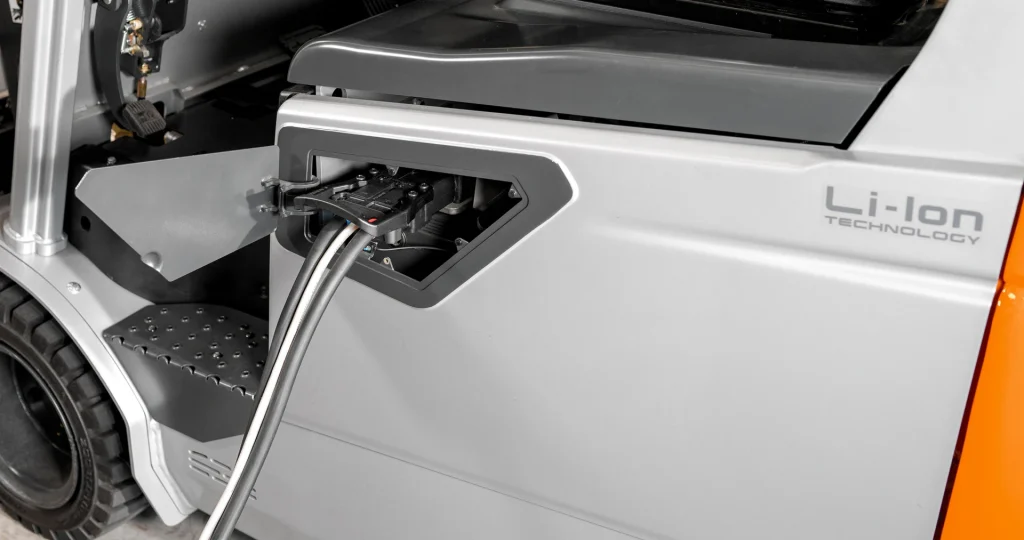
| STILL RCE 15 – 20 | 1,500–2,000 kg | 6,500 mm | 15–16 km/h | 80 V | Three- and four-wheel versions, lithium-ion battery with lateral quick-charge access |
| STILL RCE 25 – 35 | 2,500–3,500 kg | 6,500 mm | 15 km/h | 80 V | Low- and medium-intensity work, pre-configured packages |
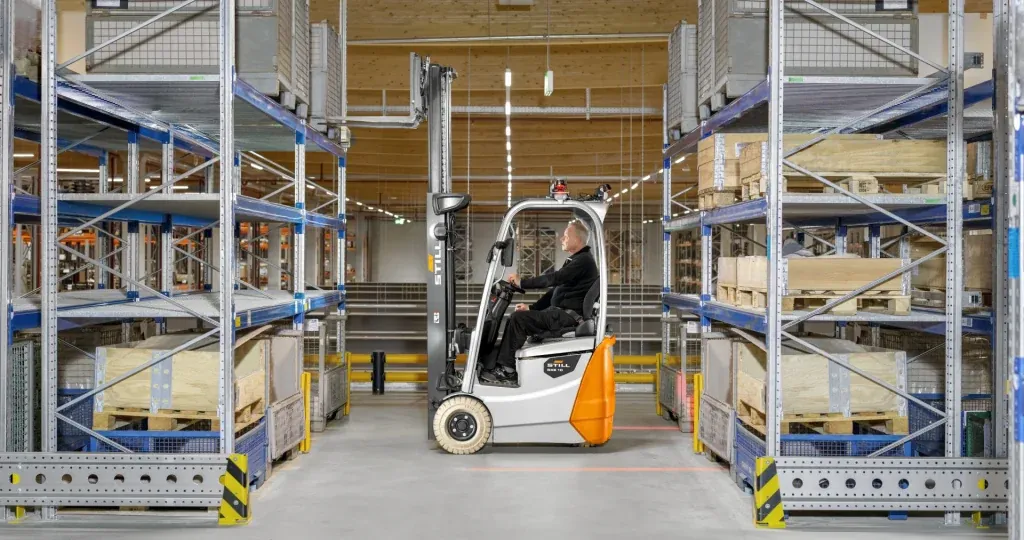
The RXE 10 – 16C is the smallest member of the STILL electric counterbalance family, suited to warehouses that need to manoeuvre in tight spaces. STILL positions the RCE 15 – 20 and RCE 25 – 35 for occasional transport and stacking tasks indoors or outdoors; the RCE 25 – 35 comes in three pre-configured packages with different masts, making it quick to choose a right-sized configuration.
Battery type: lead-acid or lithium-ion?
A lead-acid battery requires a lower initial investment and suits single-shift trucks charged overnight; in return it needs topping up with water, a ventilated charging area and often a spare battery for multi-shift use. A lithium-ion battery costs more up front but allows opportunity charging during breaks, needs almost no maintenance and keeps performance to the end of the shift.
A single-shift, light-duty warehouse usually optimises cost with lead-acid; multi-shift operations should consider lithium-ion, as it cuts spare batteries, maintenance work and downtime. Read more about the forklift battery and the comparison lithium-ion vs lead-acid forklift battery.
Renting, buying used and checking a truck’s origin
Forklift rental
When demand is seasonal or you want to preserve capital, renting turns a large investment into a predictable periodic cost; long-term contracts usually include maintenance. See STILL forklift rental and the analysis rent or buy a forklift.
Used forklifts
For low to medium intensity, a used truck with a clear history is worth considering, provided you check operating hours, mast, chains, hydraulics, battery and service records. Browse used forklifts and the checklist in used forklift buying checklist.
Risks of trucks of unknown origin
Trucks with no clear origin, technical documentation or service history can carry hidden risks:
- A degraded battery with short run time per charge.
- Worn or improperly repaired mast, chains or cylinders, affecting safety when lifting.
- Difficulty finding compatible parts, so the truck stands idle for long periods.
- Missing documents required for safety inspection under current regulations.
Buying from an authorised distributor gives transparent records, genuine parts and technical support throughout the truck’s life.
Cost factors and how to optimise them
| Cost factor | How to optimise |
|---|---|
| Load capacity, lift height | Size to the heaviest pallet and highest racking level; do not over-specify |
| Truck series | Favour compact models for low to medium intensity such as RXE, RCE, SXV-CB |
| Battery type | Single shift with overnight charging: consider lead-acid; multiple shifts: consider lithium-ion |
| Equipment options | Choose only options that serve real safety and productivity needs |
| Ownership model | Compare buying new, short-term rental, long-term rental and used trucks |
| Maintenance, downtime | Regular servicing, genuine parts, fixing small faults early |
| Operator skills | Train operators properly to reduce collisions and wear on tyres and brakes |
TCID provides forklift repair and maintenance for STILL trucks with genuine parts.
Frequently asked questions
Is a low-cost electric forklift durable?
Yes, if the truck is sized to the load, has a clear origin and is serviced regularly.
Should I choose the RXE or the RCE?
The RXE 10 – 16C suits light loads and very tight spaces such as containers and trucks. The RCE 15 – 20 and RCE 25 – 35 suit higher loads, up to 3,500 kg, for low- and medium-intensity work.
Should I buy a used electric forklift to save money?
It can make sense if demand is low to medium and the truck has a service history and is checked carefully before purchase.
How do I find out the actual cost for my warehouse?
Cost depends on capacity, lift height, battery type, number of shifts and whether you buy or rent; TCID assesses your needs and proposes a configuration with a quotation.
For a cost-optimised solution for your warehouse, send your requirements via the request a quote page or call our hotline 0902 63 79 70.