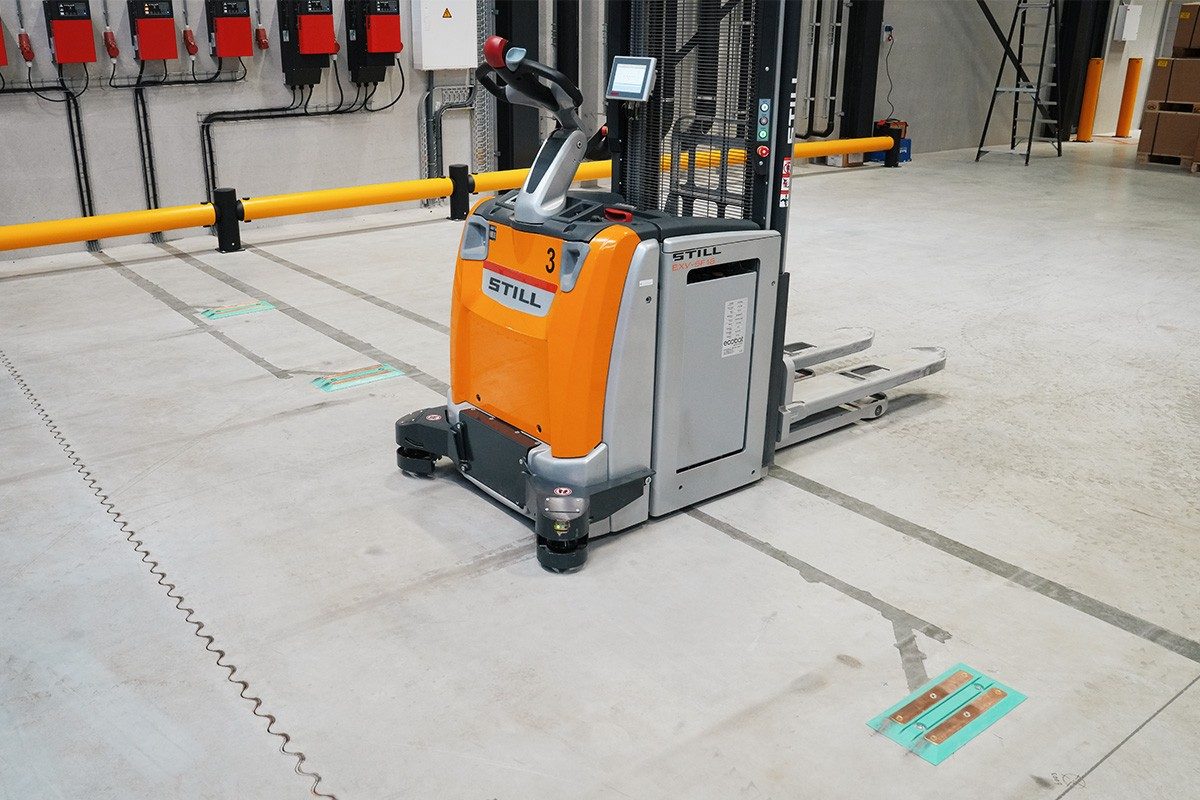
European fastener specialist Fabory has automated its large warehouse in Tilburg, the Netherlands. The new warehouse increases efficiency while providing more safety and flexibility during peak periods. The success speaks for itself: Fabory is already planning further automation projects with the STILL specialists.
| Industry | Fastening technology and supply chain solutions |
|---|---|
| Company | Fabory, the Netherlands: founded in 1947, over 1,000 employees in 12 countries |
| Challenge | An automated central warehouse to manage inventory more efficiently, reduce costs and delivery times and optimise intralogistics |
| Solution | Automated 12-metre racking, contour and weight check, transport control linked to SAP, automatic charging via ground contacts |
| STILL equipment | 3 MX-X iGo automated very narrow aisle trucks, 4 EXV iGo automated high lift pallet trucks with lithium-ion batteries, EXH-SF stand-on pallet truck |
A central warehouse that runs quietly and precisely
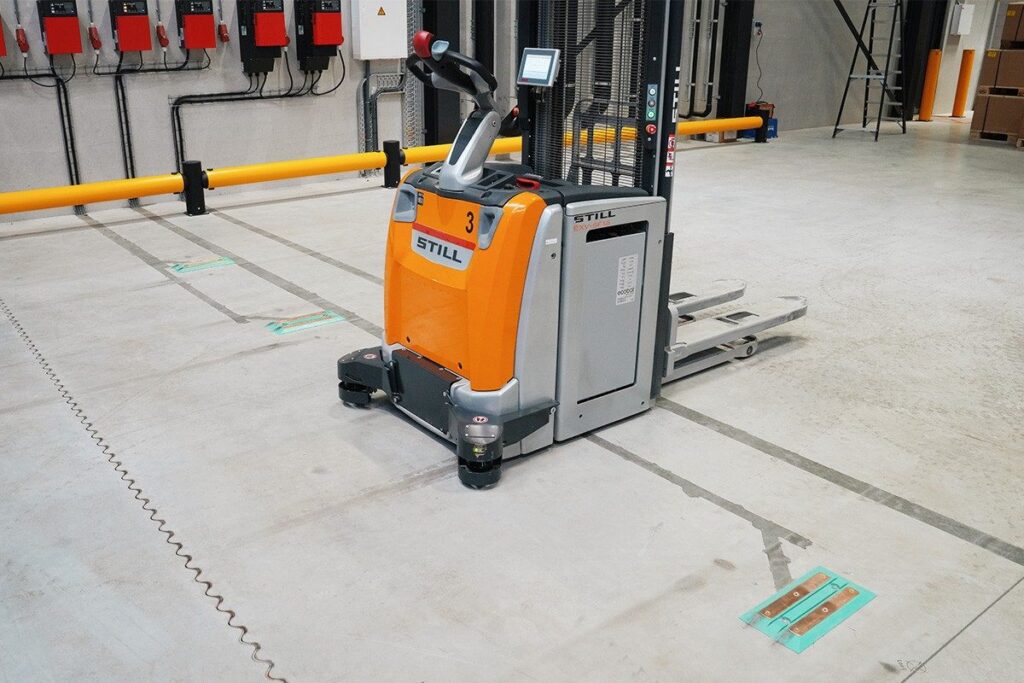
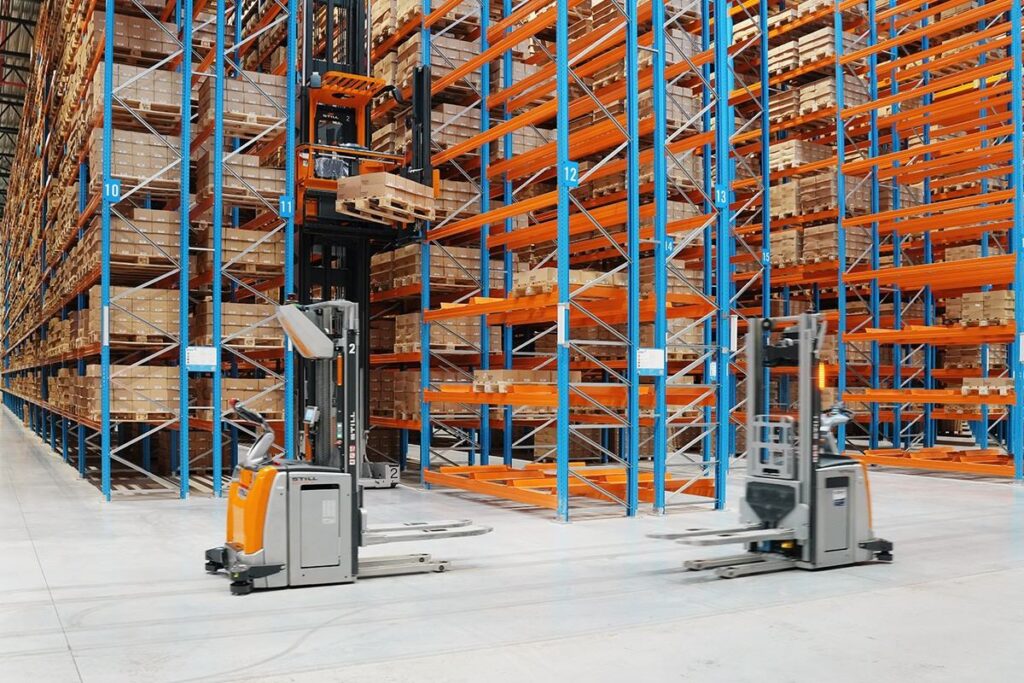
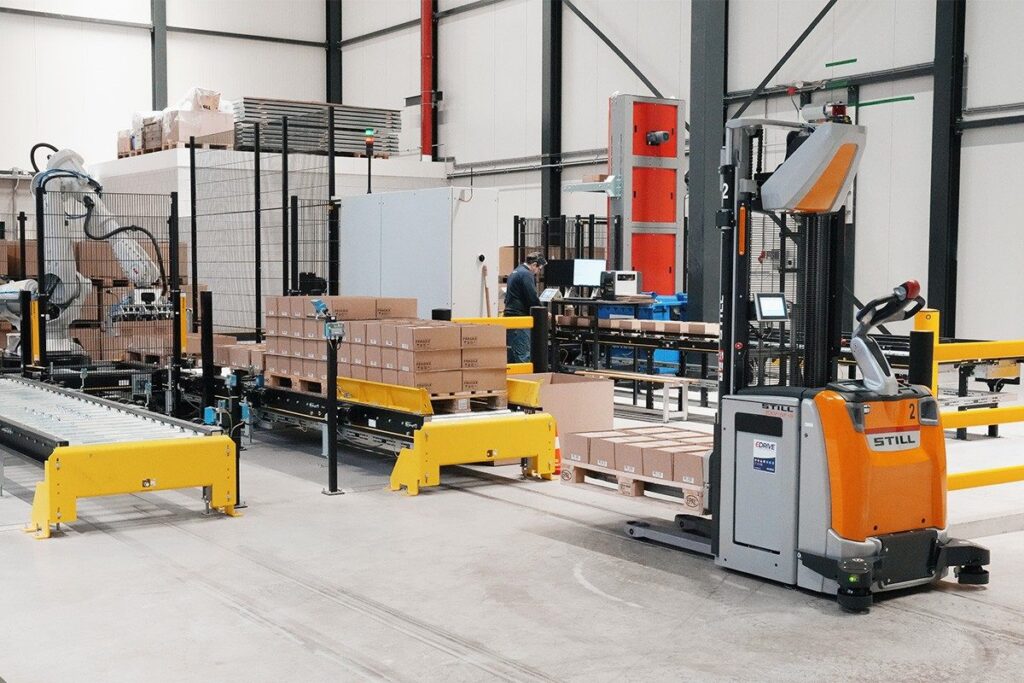
The peace and quiet in Fabory’s new warehouse is striking. Four automated STILL EXV iGo high lift pallet trucks glide between goods receiving, storage and the palletising robot. Three automated STILL MX-X iGo very narrow aisle trucks put every pallet in the right place, driving unmanned through 19 of the 21 aisles with some 28,000 bays. Two aisles are reserved for manual operation, but automation works so well that this will soon drop to one.
From this central warehouse Fabory supplies its three European distribution centres (UK, Portugal and Czech Republic) and keeps the picking areas there stocked. The range comprises around 450,000 items, 100,000 of which are stored in Tilburg.
A proven concept
“We have been enjoying this peace and quiet since October 2023, when we commissioned the new warehouse,” says Fabory Logistics Director Joost Jansonius. “Previously the warehouse was spread over two locations in Tilburg with daily shuttles in between. To reach our growth targets, we had to make major improvements.” Fabory wanted a high degree of automation combined with high storage density and individually accessible pallet bays.
“The solution offered by STILL was the best fit. STILL had already implemented a similar warehouse at Tarkett in Waalwijk, exactly what we were looking for. This proven concept was the deciding factor,” says Fabory Project Manager Leon Broere. The 12-metre-high warehouse receives supplier deliveries on mixed Euro pallets holding up to 40 Fabory products.
Goods flow from receiving to storage
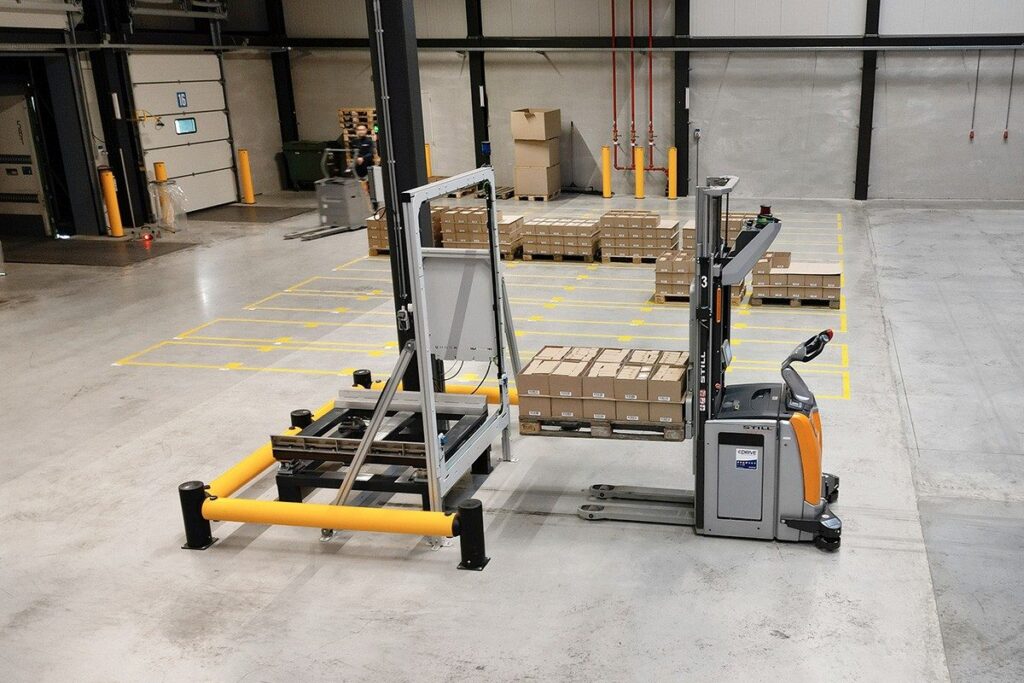
Containers and trucks are unloaded manually with a STILL EXH-SF stand-on low lift pallet truck. A fixed scanner reads the pallet label at the ramp; the operator places the pallet at a handover position and scans the item QR code. From there the STILL system takes over: the transport control system receives storage and retrieval orders from SAP, a STILL EXV iGo takes the pallet to the contour check with integrated weighing, and iGo systems assigns the optimal location based on height, weight and ABC classification. Problem pallets go to dedicated rework stations.
The EXV iGo delivers released pallets to the transfer station at the end of the racking, where the automated STILL MX-X iGo very narrow aisle truck stores them. The MX-X changes aisle only at the end of the racks, so the two truck types never cross paths. When idle for a while or when the battery reaches a defined level, the trucks drive to their parking position and charge automatically via ground contacts, ready around the clock.
Up to 300 double cycles at peak times
For retrieval, the transport control system makes sure the EXV iGo trucks bring the right pallets to the palletising robot, which places packaging units individually onto a conveyor, for example towards the automated small parts warehouse. The system is designed for an average of 150 pallets a day, rising to 300 pallets in double cycles at peak times, with empty runs virtually eliminated.
Joint workshops to rethink processes
“We really enjoyed working with STILL. Project manager Yorick Oosthoek gave excellent support during installation, communication was open throughout, and we stayed on schedule and within budget,” says Broere. Oosthoek adds: “Automation has a significant impact on the logistics process and the organisation. We accompany the customer not just during installation but especially when rethinking how they work, so we run workshops that go through the entire process from start to finish.”
Results
- Better inventory management and the targeted cost reductions.
- More flexibility at peak times; delivery times down from one to two days to two to three hours.
- A much safer warehouse environment for people and machines.
- The warehouse runs with two employees per shift, two shifts, five working days.
- A new contract with STILL to extend automated transport to other parts of the central warehouse over the next two years.
“Progress in automation is not limited to greenfield projects; major advances can also be made in brownfield plants,” says Broere.
Lessons for companies in Vietnam
- Separate the traffic: transfer stations at the end of the racking let automated trucks and very narrow aisle trucks work without crossing paths.
- Automate existing warehouses too: like Fabory, automate step by step instead of waiting for a new build; see our warehouse automation solutions.
- Distributors with many SKUs: contour checks, weighing and ABC classification optimise storage locations for retail and wholesale operations.
See other STILL reference projects.
Source: STILL GmbH, Central warehouse optimisation with STILL: Automation increases efficiency, safety and flexibility. Photos: STILL.
Need advice on automating a central warehouse? Send your request via the quote request page or call 0902 63 79 70.