Electronics assembly plants usually run many parallel lines, each needing small component deliveries several times per shift. If every delivery is a forklift trip, workshop aisles fill with trucks and people. A tow tractor for the electronics industry combines many delivery points into one scheduled route with a multi-trailer tugger train.
How does a tugger train suit an electronics plant?
Route-based supply (milk run) is common in lean production: a train leaves the satellite store, stops at each line to deliver component bins and collect empties, then returns. With light electronics in many small bins, one train replaces many single forklift trips.
- Line feeding: delivering trays and component bins on a fixed schedule.
- End-of-line collection: moving roll cages and finished goods racks to packing.
- Empty returns: bringing empty trays and bins back to the store for reuse.
- Linking buildings: moving semi-finished goods between workshops on the same site.
STILL LTX 20: compact tractor for narrow workshop aisles
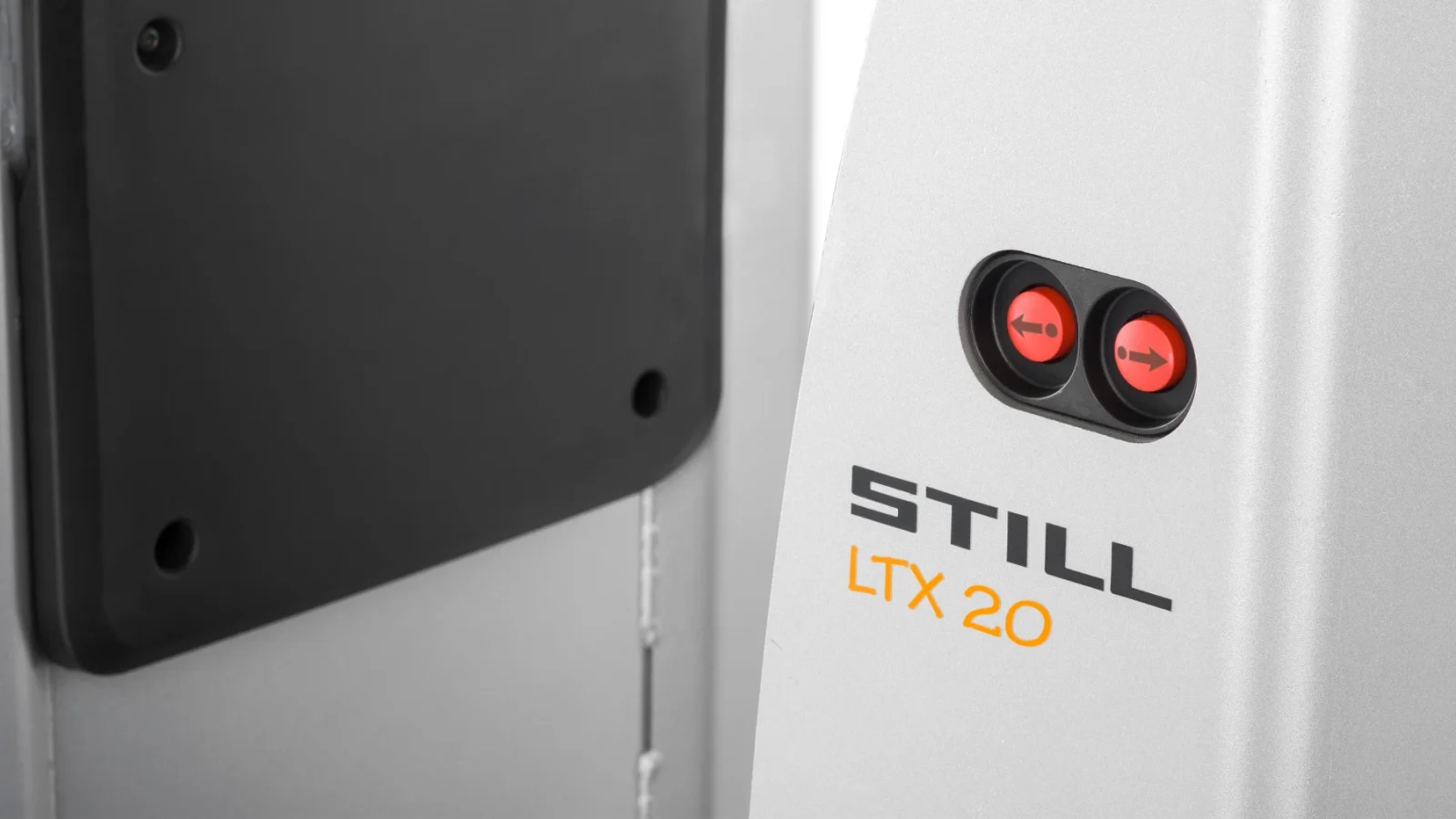
The STILL LTX 20 has a towing capacity of up to 2,000 kg and a vehicle width of just 600 mm, so it manoeuvres in narrow aisles between lines. The manufacturer describes it as ideal for tugger trains in lean production and for moving maintenance materials. Pedestrian mode spares the driver from getting on and off at short stops, and the driver has a full view of the trailer coupling when hitching. A low step and folding seat make repetitive work across a shift less tiring.
STILL LTX 50: longer routes, heavier trains
When the route links several buildings or pulls many trailers, the STILL LTX 50 tows trailers with a total weight of up to 5,000 kg at up to 14 km/h. The source says it supports lean production, reduces internal traffic and completes long journeys quickly. The STILL Easy Drive steering wheel has an integrated display, with controls usable by either hand without changing grip. Compact dimensions keep it suited to narrow aisles, and optional lithium-ion technology allows round-the-clock availability.
Recommendation table: process – model – reason
| Process | Suggested model | Reason |
|---|---|---|
| Line feeding within one workshop | STILL LTX 20 | 600 mm wide, pedestrian mode |
| Maintenance materials | STILL LTX 20 | Tows up to 2,000 kg, compact |
| Routes linking several buildings | STILL LTX 50 | Up to 14 km/h, tows up to 5,000 kg |
| Three-shift plants | STILL LTX 50 | Lithium-ion option |
Designing a supply route for an electronics workshop
- Establish each line’s hourly component demand to set the route cycle.
- Choose trailers that fit the containers: trays, plastic bins, roll cages; standardise handover height at the line.
- Mark stop points and dedicated lanes, separated from worker flows.
- If the route crosses electrostatic protected or dust-controlled areas, agree internal rules; STILL’s published specifications do not state anti-static features for tow tractors, so discuss this during the survey.
The tugger train principle is explained in electric tow tractors and tugger trains. Category: STILL tow tractors. Other types: forklift solutions for electronics.
Frequently asked questions
Can tow tractors fully replace forklifts in the workshop?
No. Tow tractors handle route transport; lifting pallets in the store still needs forklifts or electric pallet trucks.
LTX 20 or LTX 50 for an electronics plant?
The LTX 20 suits short routes within one workshop with narrow aisles. The LTX 50 suits long routes, many trailers or several buildings.
Can a tugger train be automated?
It can be considered later. First stabilise routes, schedules and containers with driver-operated tractors.
Need to design a component supply route? Send a request on the quote page or call 0902 63 79 70.