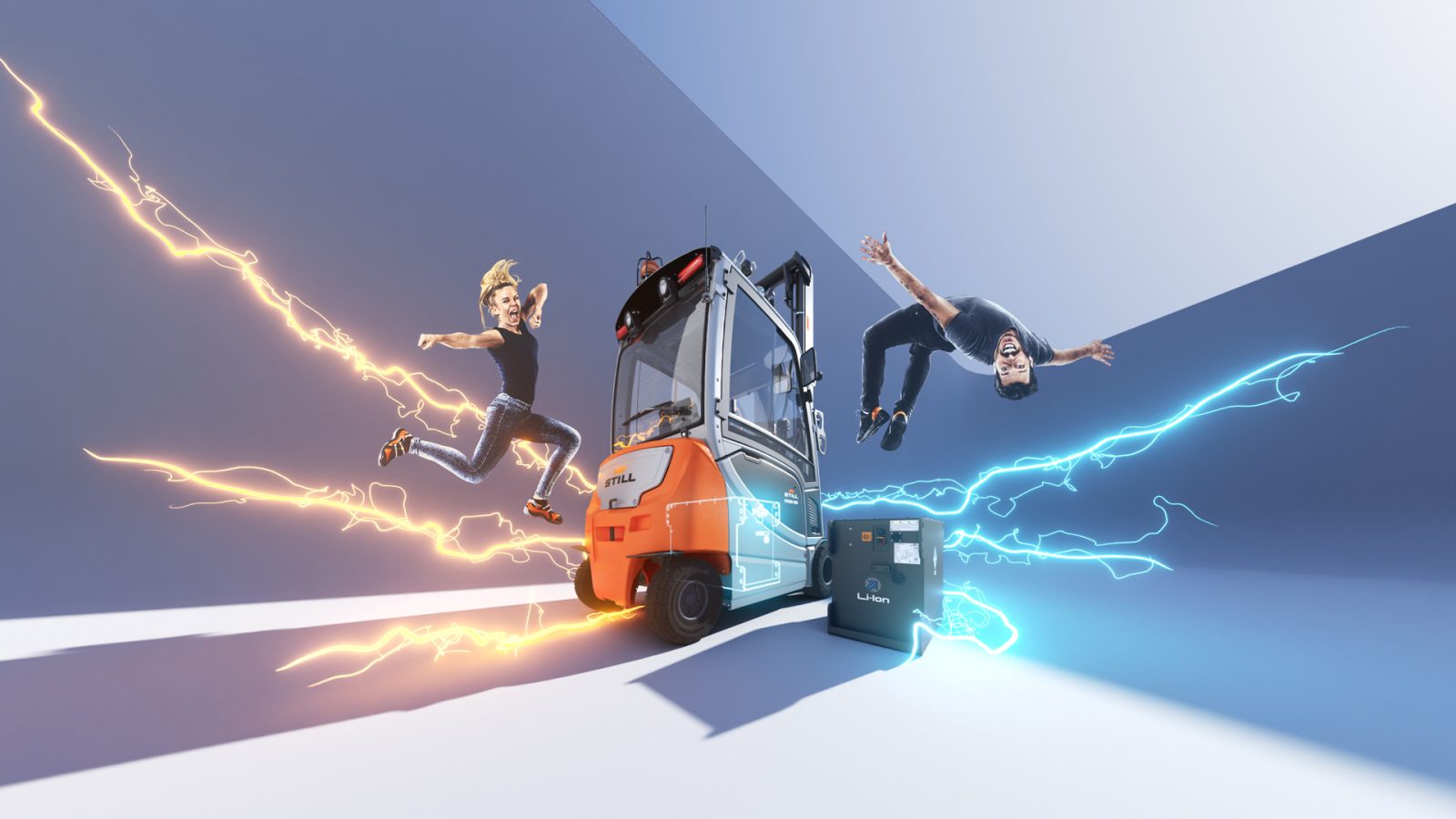
The battery is one of the most expensive and important components of an electric forklift. There are two main options today: the traditional lead-acid battery and the lithium-ion battery. Choosing the right type keeps the truck running for the full shift, reduces downtime and saves costs over the truck’s entire service life.
Lead-acid batteries: familiar, lower investment
- Advantages: lower initial investment, familiar technology, well suited to trucks running one shift and charging overnight.
- Disadvantages: distilled water must be topped up regularly; a full charge takes many hours plus cooling time; partial charging should be avoided; gas is released during charging, so a well-ventilated charging area is needed. For 2–3 shifts you usually need spare batteries and battery-change equipment.
Lithium-ion batteries: fast charging, virtually maintenance-free
- Advantages: fast charging and opportunity charging during breaks and meal times without harming the battery; no water top-ups; no gas released during charging; stable voltage, so the truck keeps its performance until the end of the shift; longer cycle life.
- Disadvantages: higher initial investment; requires a compatible charger from the manufacturer.
| Criterion | Lead-acid battery | Lithium-ion battery |
|---|---|---|
| Initial investment | Lower | Higher |
| Opportunity charging | Limited | Yes |
| Water top-ups, cleaning | Regular | None |
| Gas released when charging | Yes – ventilated area required | No |
| Performance at end of shift | Drops as voltage falls | Stable |
| Best suited to | 1 shift, overnight charging | 2–3 shifts, continuous operation, food, cold stores |
When should you choose lithium-ion?
- The truck runs two or more shifts and you do not want to invest in spare batteries.
- The warehouse has no dedicated charging room (or you do not want to build one).
- Food and pharmaceutical operations that require a clean environment.
- You want to reduce maintenance work and truck downtime.
Many STILL trucks are available with either technology: the electric counterbalance trucks RX 20 and RX 60 can use lead-acid or lithium-ion batteries, while the ECH 12C / ECH 15C pallet trucks use lithium-ion batteries that charge directly from a power socket via an external charger – very convenient for shops and small warehouses.
Tips to extend battery life
- Lead-acid: avoid deep discharge; complete full charging cycles and avoid partial charging; top up distilled water to the correct level after charging; keep the terminals clean.
- Lithium-ion: use the correct charger; make use of opportunity charging during breaks; avoid leaving the truck fully discharged for long periods.
- Service the battery together with the truck – see our maintenance & repair service.
Preparing the charging area for each type
Charging infrastructure is often overlooked when comparing the two technologies, yet it directly affects the warehouse layout and daily operations.
- Lead-acid: requires a dedicated, well-ventilated charging area because gas is released during charging; space for topping up distilled water and cleaning batteries; for multi-shift operation, racks for spare batteries and battery-change equipment.
- Lithium-ion: chargers can be placed close to the work area, for example next to the loading bay or where operators take their breaks, to make use of opportunity charging. No separate charging room is needed, but you still need a power supply with sufficient capacity and safe access around the charging point.
For warehouses running many lead-acid trucks, a gradual switch to lithium-ion can free up charging-room space for storing goods.
Lithium-ion across the STILL range
STILL offers lithium-ion technology on many truck series, from electric pallet trucks to high-capacity counterbalance trucks:
- STILL RX 20 Li-Ion: according to the manufacturer, just 30 minutes of charging can extend the usage time by several operating hours.
- STILL RX 60: with the lithium-ion option, the truck can run three continuous shifts without a replacement battery.
- STILL RCE 15–20: lithium-ion technology is standard, with a fast-charging port on the side for convenient charging.
- STILL ECH 12C / ECH 15C: the lithium-ion battery can be fully charged or interim charged at any time from a power socket via the external charger.
Frequently asked questions
Can a truck that uses a lead-acid battery be upgraded to lithium-ion?
It depends on the model and year of manufacture. The battery compartment, counterweight, controller and charger compatibility all need to be checked. Contact our technical team for a specific assessment.
What if the truck runs only one shift per day?
If the truck runs one shift and has enough time to charge overnight, a lead-acid battery is still a sensible choice in terms of investment. Lithium-ion is worth considering if you want to reduce maintenance work, do not want to maintain a dedicated charging area or plan to add shifts in the near future.
Are lithium-ion batteries safe?
Manufacturer batteries for forklifts have a battery management system (BMS) that monitors the temperature and voltage of each cell. The key is to use original batteries and chargers and not to fit unverified third-party batteries.
Want to know which option is cheaper for your warehouse? Send a request with your number of shifts and daily operating hours, or call our hotline 0902 63 79 70, and we will compare the costs of both options. Learn more about our energy solutions.