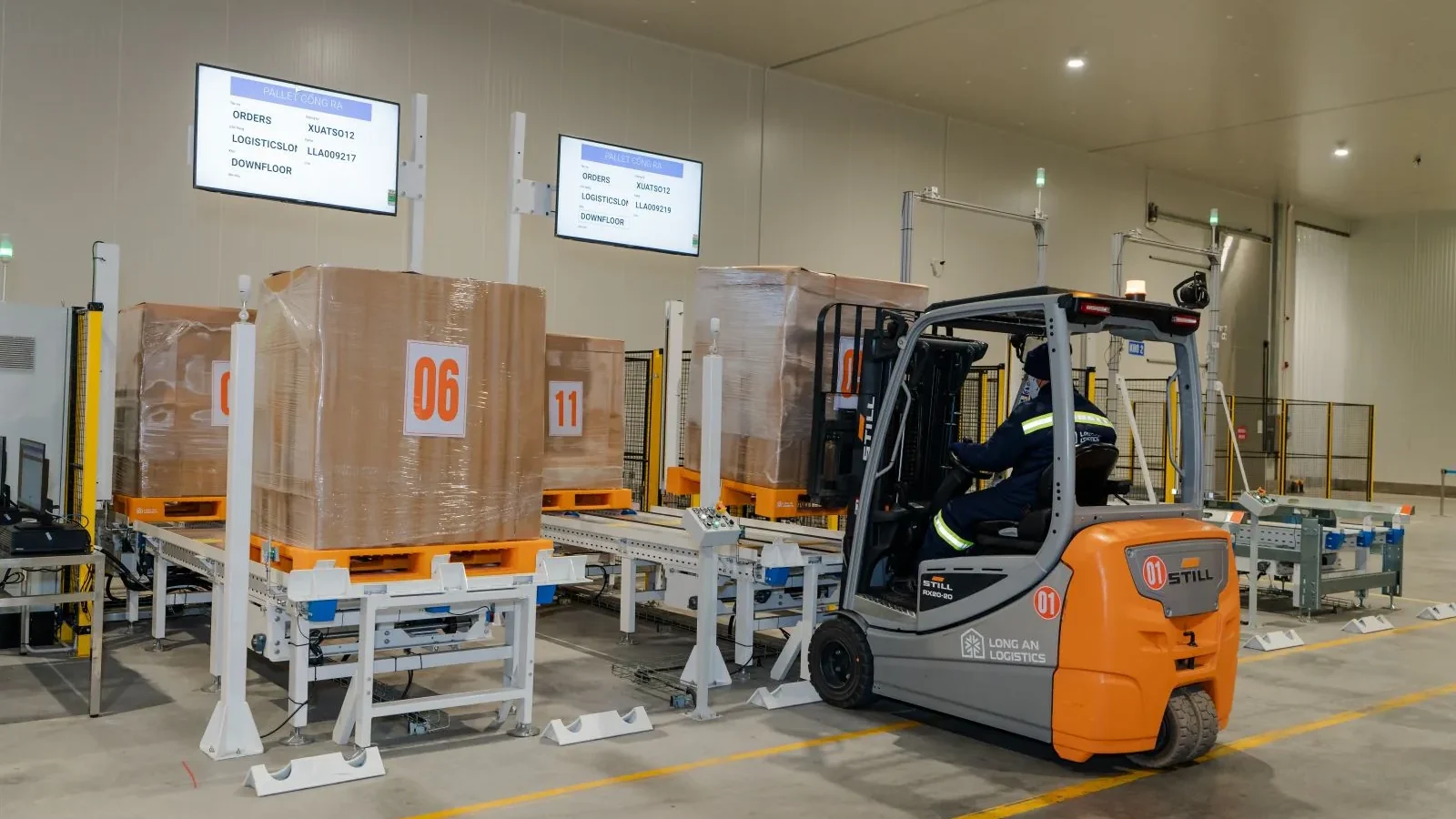
Cold storage is where electric forklifts work hardest: low temperatures weaken batteries, trucks shuttle constantly between cold and ambient zones, and frozen food cannot wait. That is why the question “lithium-ion or lead-acid in a cold store” comes up in almost every cold storage project we advise on. This article focuses on the cold environment only: what lithium-ion batteries offer, what real data from STILL shows, and what to know about truck configuration, chargers and charging schedules before you invest.
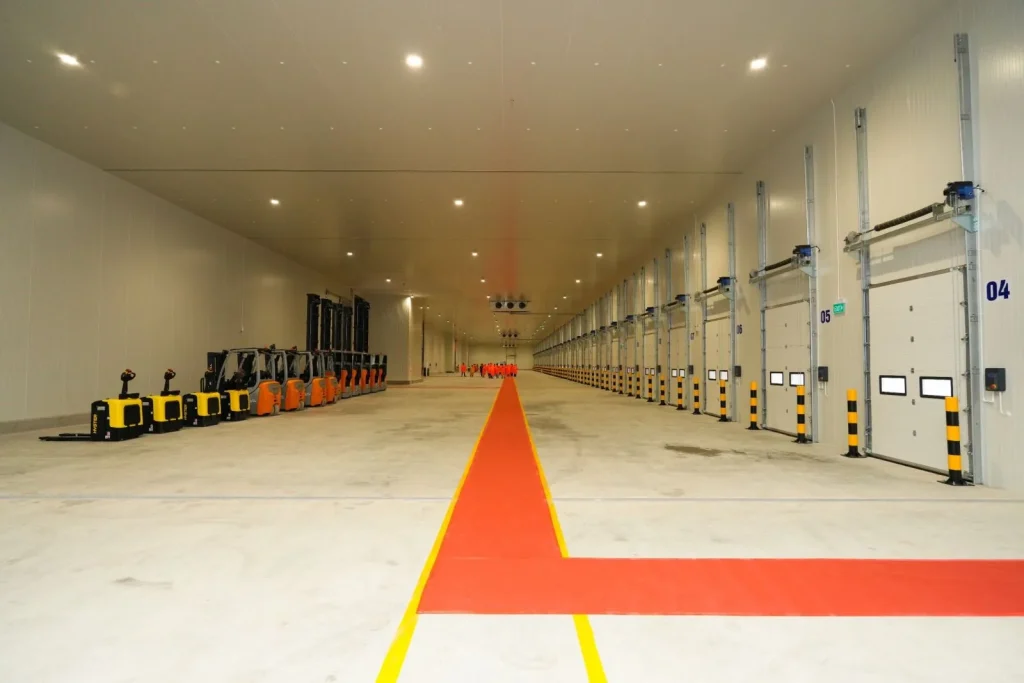
Why are batteries a challenge in cold storage?
The battery is the heart of an electric forklift and also the component most affected by low temperatures. In chilled and frozen warehouses, companies usually face three issues:
- Less usable capacity: at low temperatures a lead-acid battery delivers less energy and charges more slowly, so trucks can run flat before the end of the shift.
- Battery charging and changing outside the store: lead-acid batteries are charged, topped up and swapped in a dedicated charging room. Trucks leave the cold zone and lose time travelling and waiting, while cold stores often run several shifts.
- Seasonal peaks: demand for fresh and frozen food rises sharply in peak season, and every stop for a battery change delays orders.
Operators and trucks are also exposed to cold air and to condensation when moving from cold to warm areas. General points on choosing cold store trucks are covered in our article on cold storage forklifts; this article goes deeper into energy.
How do STILL lithium-ion batteries perform at low temperatures?
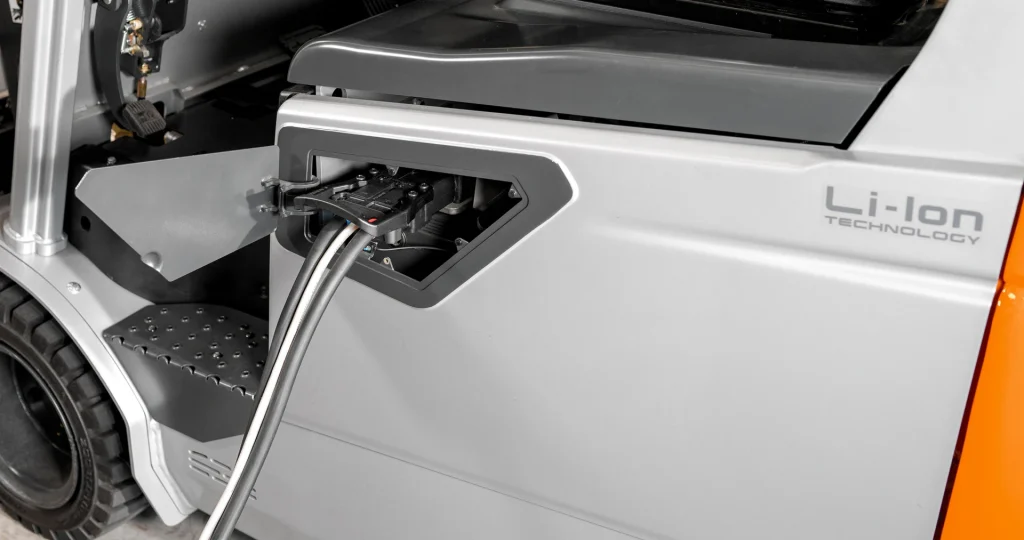
STILL lithium-ion batteries use lithium iron phosphate (LFP) technology. According to STILL, a key advantage of this chemistry is that it maintains optimal efficiency regardless of operating temperature, even in cold storage warehouses. Features that matter in the cold include:
- Wide operating range: in the cold store test at MD in Italy, the batteries were approved for operation between +60 °C and −35 °C.
- Cell-level monitoring: on the STILL RX 20 electric forklift, an intelligent electronics system monitors every battery cell in real time during operation. STILL also describes the RX 20 Li-Ion batteries as suitable for cold storage.
- Low-temperature protection option: STILL Li-Ion batteries are designed for each truck series, at 24 V, 48 V and 80 V, and a low-temperature protection option is available for cold stores.
- No watering: the batteries are sealed, need no distilled water and do not release gas during charging like lead-acid batteries.
Real data: a 180-day test in the MD cold store
MD S.p.A. is a major Italian retailer with more than 780 stores. Before switching to lithium-ion, the company tested four STILL FM-X 14 reach trucks in a temperature-controlled cooling chamber at its main distribution centre in Gricignano di Aversa, which stores fresh and frozen products. Truck performance and the battery seals were among the features scrutinised.
According to STILL, the results after 180 days of use were:
- No loss of battery performance and optimal output despite the low temperatures and intensive use.
- Fast interim charging during breaks or shift changes, recharging up to 80 percent.
- Thanks to interim charging, trucks could run three shifts without a battery change, saving considerable time and cost.
- Higher availability helped cover seasonal peaks, especially in summer when demand for fresh and frozen food rises.
After the test, MD ordered 100 STILL EXU 15/16 and 15 ECH 12 pallet trucks with lithium-ion technology, adding to its existing fleet of more than 2,200 STILL trucks. A similar lithium-ion pallet truck on our site is the STILL ECH 12C / ECH 15C.
Lithium-ion vs lead-acid in cold storage
The table below summarises the differences that matter in the cold. A general comparison of investment, service life and charging infrastructure is in our article on lithium-ion vs lead-acid forklift batteries.
| Criterion | Lithium-ion (LFP) | Lead-acid |
|---|---|---|
| Performance at low temperature | According to STILL, optimal efficiency even in cold storage | Lower usable capacity, slower charging |
| Interim charging in breaks | Yes, at any state of charge | Limited, needs full charge cycles |
| Multi-shift work | One battery can cover 2–3 shifts with interim charging | Usually needs spare batteries and mid-shift changes |
| Charging room | Charging on site, distributed chargers | Ventilated charging room and battery-change equipment |
| Maintenance | No watering | Regular watering and cleaning |
| Initial investment | Higher | Lower |
Key points for using lithium-ion in cold storage
A good battery is not enough; configuration and operation decide the real result. These are the steps we usually work through with customers:
- Define the temperature range and time spent in the cold: chilled, frozen or deep-freeze, and whether trucks work inside continuously or only enter to load and unload. This decides whether the low-temperature protection option is needed.
- Specify the full cold store configuration, not only the battery: the STILL RX 20 data sheet lists a cold store variant with hydraulic oil suitable for low temperatures. At Yusen Logistics in Belgium, trucks in the cold area also use a special low-temperature hydraulic oil. For deep-freeze stores, a heated cabin on reach trucks is worth considering.
- Place chargers where operators take breaks: interim charging only works when chargers sit where trucks stop naturally, such as the dock area or break room, not in a distant charging room.
- Plan charging around shifts: use meal breaks, rest breaks and shift changes to top up. According to STILL, lithium-ion batteries regain 60 percent of their charge after 40 minutes and a full charge after about an hour; on the RX 20 Li-Ion, 30 minutes of charging extends usage by several operating hours.
- Size the electrical load for the whole fleet: interim charging means more trucks plugged in at the same time. The STILL Smart Energy Unit allocates a defined amount of energy to each charger to avoid peak loads. See our energy solutions page.
- Include batteries and chargers in preventive maintenance: check charging cables, plugs, seals and spots where moisture collects when trucks move in and out of the cold.
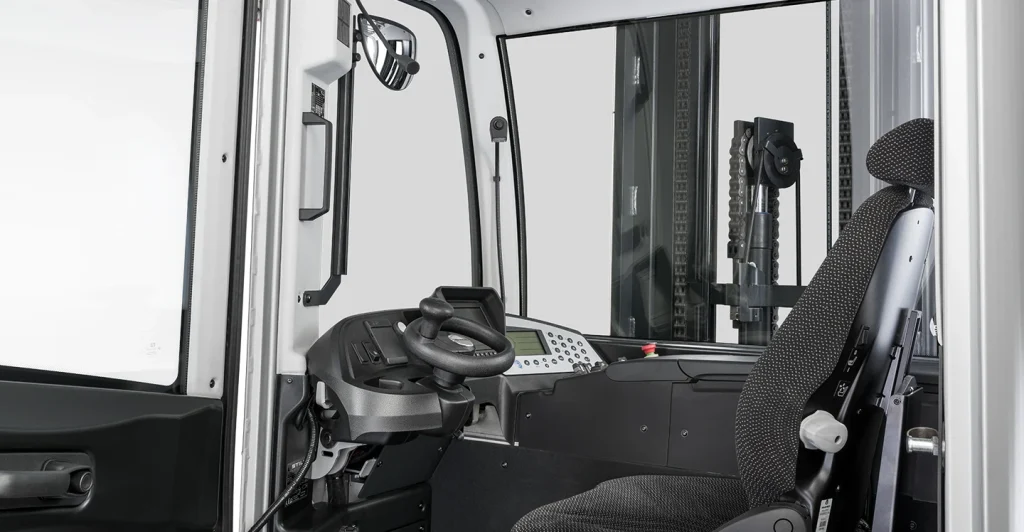
Which STILL trucks suit lithium-ion cold storage?
Reach trucks for high racking
The STILL FM-X is the workhorse in high-bay cold stores. At HAVI Logistics in Germany, truck models used in deep-freeze zones were equipped for temperatures down to −30 °C, and some FM-X 25 trucks were fitted with a heated cabin. See also our reach trucks range.
Counterbalance trucks at the docks
The STILL RX 20 offers Li-Ion batteries suitable for cold storage and a cold store variant with low-temperature hydraulic oil, a good fit for unloading reefer containers and moving goods at the store entrance.
Pallet trucks for horizontal transport
Lithium-ion pallet trucks such as the ECH 12C / ECH 15C can be topped up at any time with an external charger, which suits short runs between the docks and the buffer zone.
Experience from cold stores in Vietnam
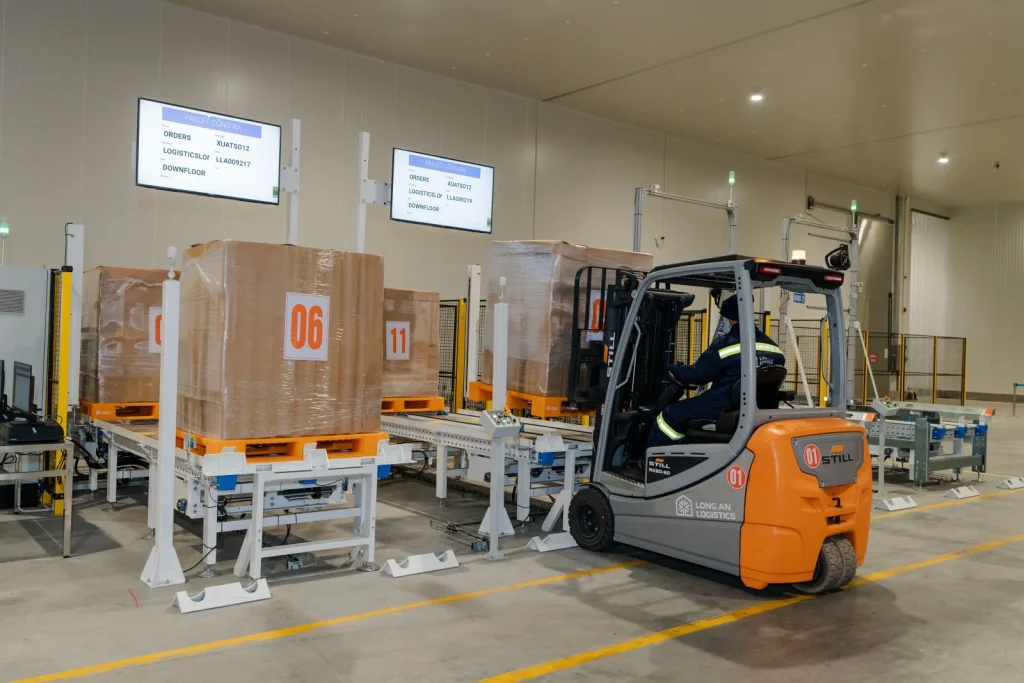
In Vietnam, many cold stores run STILL fleets of FM-X reach trucks, RX 20 electric forklifts and pallet trucks, for example the Long An cold store (4 FM-X 25, 4 EXU 20, 4 RX 20-20, delivered in 2023), the Transimex cold store in former District 9 and the Vinh Hoan seafood plant. Each site has its own battery configuration depending on shifts and temperature. The full list is on our reference projects page, and we can arrange a visit to an operating warehouse.
Frequently asked questions
Can lithium-ion batteries be used in deep-freeze stores?
Yes. In the MD test, STILL batteries were approved for operation down to −35 °C and showed no loss of performance after 180 days. The exact configuration (low-temperature protection, hydraulic oil, cabin) should match the actual store temperature.
Should batteries be charged inside the cold store?
Chargers are best placed where trucks stop naturally during the shift, usually the dock area or break room, following the manufacturer’s instructions. Our engineers define charger locations during the site survey.
Can a truck running on lead-acid be converted to lithium-ion?
It depends on the model and year, because STILL Li-Ion batteries are designed for each truck series. Send us the model and serial number so we can check truck and charger compatibility. See also our forklift battery guide.
Planning forklifts for a cold store? Send us the store temperature, number of shifts and expected fleet size via the quote request page or call 0902 63 79 70, and our engineers will propose a battery configuration and charging plan.
Sources: STILL GmbH – MD opts for Li-ion technology, Lithium-ion batteries – are they really worth it?, STILL RX 20, HAVI Logistics. Photos: STILL, TCID projects.