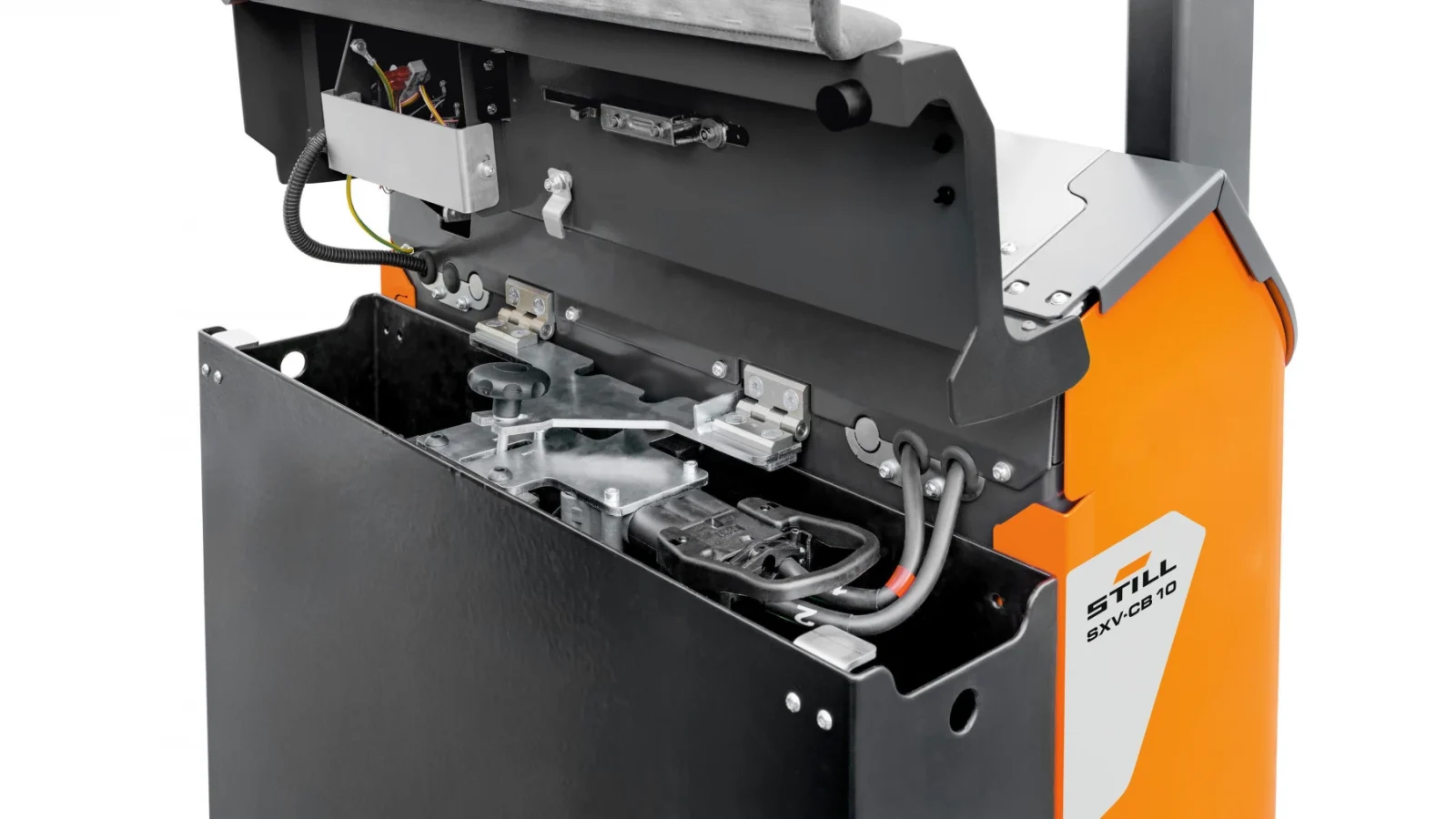
A forklift battery is the only energy source of an electric forklift: it decides how long the truck lasts per shift, how strongly it lifts and how much care it needs. Below is what fleet owners need to know about the forklift battery: types, voltage and capacity, charging, signs it needs replacing and why genuine batteries matter.
What types of forklift battery are there?
Both main technologies power the traction motor, the hydraulic pump and the control system, but they differ in construction, charging and maintenance.
- Lead-acid battery: multiple cells in a steel tray filled with electrolyte; heavy, needs topping up with distilled water and full charging cycles.
- Lithium-ion battery: STILL uses lithium iron phosphate (LFP) technology – a sealed battery with no topping up that can be opportunity-charged between shifts. There are two lines: Li-Ion Plus for the highest intensity of use and standard Li-Ion focused on cost-effectiveness.
For a criterion-by-criterion comparison of the two technologies, see lithium-ion vs lead-acid forklift battery.
Forklift battery voltage by STILL truck range
Voltage is the first value that must match the truck. The bigger the truck and the heavier the load, the higher the system voltage tends to be. The table below is compiled from STILL specification sheets:
| Voltage | STILL range | Truck group |
|---|---|---|
| 2 × 12 V | ECV 10 | Compact stacker |
| 24 V | ECH 12C/15C, EXH 16–30, EXH-S, EXH-SF, EXD 18C/20C, EXV, EXV-SF, FXV 14/16, FXH 20/25 N, OPX, OPX-L 12, LTX 20, LTX 50 | Pallet trucks, stackers, order pickers, light tow tractors |
| 24 V | RXE 10–16C, SXV-CB 10, EXV-CB | Compact electric counterbalance trucks, counterbalanced stackers |
| 48 V | RX 20, EXH 14C, LTX 70 | Electric counterbalance forklift, pallet truck, tow tractor |
| 48 V | FM-X, FM-X SE, FM-4W, NXV | Reach trucks, narrow aisle trucks |
| 80 V | RX 60, RCE 15–20, RCE 25–35 | Medium and heavy-duty electric counterbalance forklifts |
| 80 V | LXT 120–350, LXW 20/30 | Tow tractors, platform trucks |
| 48 V or 80 V | MX-X | Very narrow aisle truck |
For electric forklifts of the counterbalance type: RXE and SXV-CB run on 24 V, RX 20 on 48 V, RX 60 and RCE on 80 V.
What does the Ah capacity tell you?
At the same voltage, a higher Ah rating means longer running time between charges. Maximum capacities according to STILL: EXH 16–20 up to 250 Ah; EXD 18C/20C and EXV 14–20 up to 375 Ah; EXH 25/30 up to 500 Ah; SXV-CB 10 and EXV-CB use Li-Ion batteries from 300 Ah to 500 Ah; OPX up to 620 Ah; FXV and FXH up to 625 Ah.
Charging and caring for a forklift battery
A forklift battery that fails early is usually the result of poor charging habits. Always use the charger specified by the manufacturer for the battery type and truck voltage.
Lead-acid batteries
- Charge when the truck shows a low level and complete the full cycle instead of plugging in and out midway.
- Check the electrolyte level on schedule and top up with distilled water only after charging. Some trucks such as the LTX 70 monitor the battery acid level and show it on the display.
- Keep lids, terminals and cables dry and clean; never leave the battery fully discharged for long.
Lithium-ion batteries
- Opportunity-charge during breaks and shift changes; there is no need to wait until the battery is empty.
- Do not open the battery casing or tamper with the battery management system; any battery fault shown on the display should be checked by a technician.
The battery and charger should be part of every forklift maintenance visit to catch loose connectors and damaged cables early.
Signs a forklift battery needs checking or replacing
Battery wear happens gradually, so it is easy to overlook. Have it checked when you notice:
- The truck no longer lasts the shift despite the same charging routine; weak lifting and noticeably slower travel towards the end of the shift.
- Unusually long charging, charger error messages; the battery runs hot or gives off an odd smell.
- Lead-acid: electrolyte leaks, corroded terminals and tray, deformed casing.
- Lithium-ion: repeated battery faults on the display, the truck limiting its own power.
A replacement is not always needed: the fault may lie in the charger, cables or controller. TCID’s forklift repair service checks the battery and charger at every maintenance visit.
Battery change or fast charging?
When trucks run 2–3 shifts, STILL trucks offer two ways to stay available:
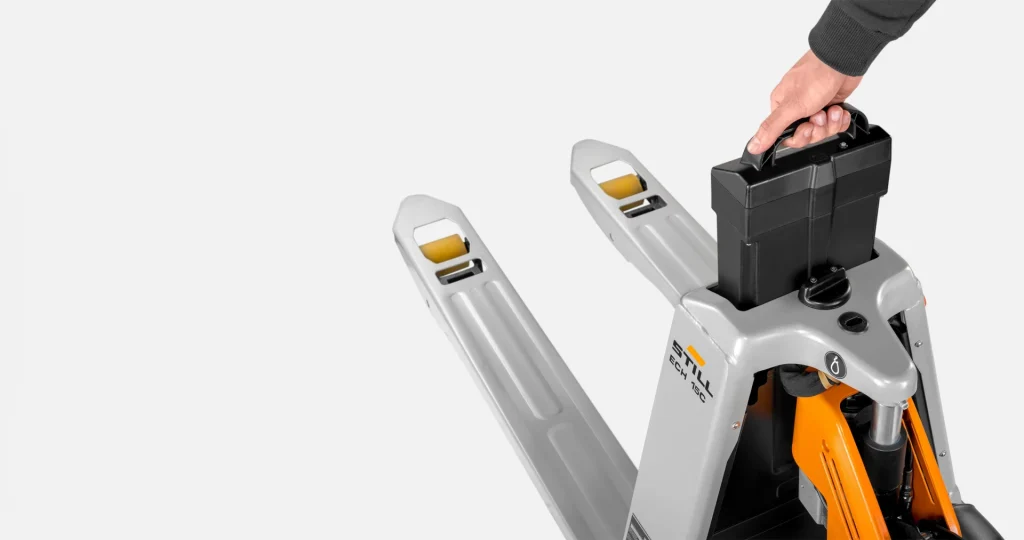
- Lateral battery change: the battery slides out of the side of the truck and a charged one goes in; available on RX 20, RX 60, EXH, EXD, LTX 20/50/70, OPX and SXV-CB 10. It requires spare batteries and a separate charging area.
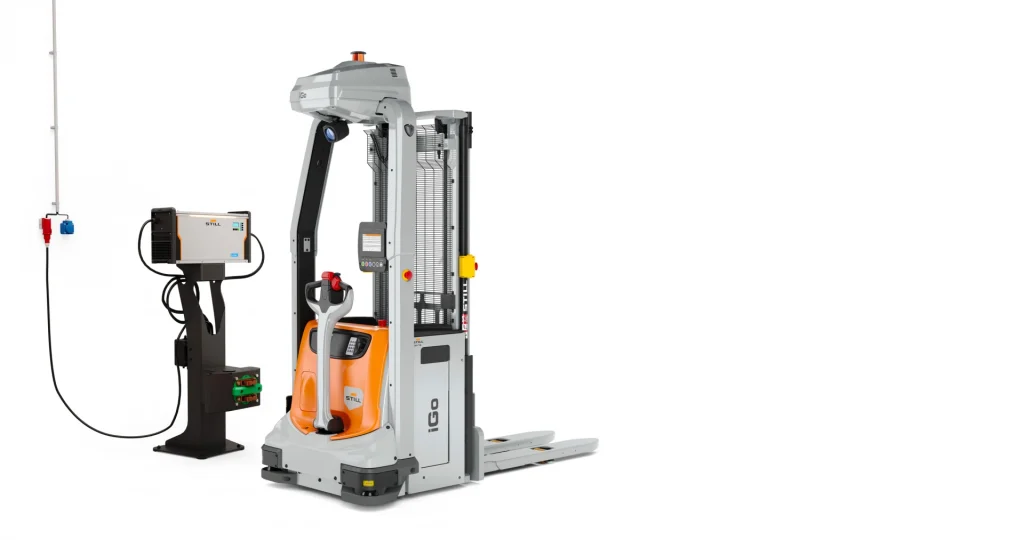
- Interim charging: with lithium-ion, the truck is plugged in on the spot during breaks. RCE, RXE, EXH 16–20 and FXR have a quick-charge port; RX 20 and EXH 14C have an onboard charger; LXT and LXW have a quick-charging socket with an onboard charger.
When the whole fleet charges in the same time window, the STILL Smart Energy Unit allocates energy to each charger to avoid load peaks. An overview of the options is on the energy solutions page.
Safety in the charging area
- Lead-acid batteries release gas while charging, so the charging area must be well ventilated, free of open flames, no smoking and clearly signposted.
- Staff topping up or cleaning batteries need gloves and safety glasses.
- Lift and lower batteries with suitable equipment.
- Switch the charger off before unplugging; replace cracked or scorched cables and connectors immediately.
- Whatever the technology, the charging location should be assessed for fire protection in line with current regulations and the manufacturer’s instructions. See also warehouse safety.
Genuine forklift battery or a no-name replacement?
A no-name battery is cheap to buy but carries hidden risks: wrong size and weight change the truck’s stability; communication with the controller and charger may not match. A lithium-ion battery without a compatible management system is also a fire risk.
STILL batteries are designed for each application and truck range and matched to the charger. TCID supplies replacement batteries and chargers with the correct part number for each truck as part of its genuine forklift parts range.
Should you switch from lead-acid to lithium-ion?
It depends on the model and year: the battery compartment, counterweight, controller and charger must all be compatible. Send the model and serial number for TCID to check.
Frequently asked questions
Can a 48 V forklift battery be fitted to a 24 V truck?
No. The battery voltage must match the truck’s design; the wrong one can damage the controller and compromise safety.
Which battery suits a truck running a single shift?
If there is enough time to charge overnight, lead-acid still does the job well. Lithium-ion makes sense if you want to stop topping up, free up the charging room or plan to add shifts.
How do I know what Ah capacity my truck needs?
Base it on operating hours, load, travel distance and break times in the shift, within the battery compartment limits of each model.
Does TCID check forklift batteries during maintenance?
Yes. TCID technicians check the battery and charger at every scheduled maintenance visit.
Need advice on choosing or replacing a forklift battery for your STILL fleet? Send your truck model via request a quote or call 0902 63 79 70.